
Gutters, Downspouts, and Yard Drainage: A Pre-Rainy-Season Checklist for Hillsides

Water on a hillside does not sit and wait. It runs, gathers speed, and looks for the lowest, easiest path down the slope. If you own a home on that slope, the easiest path is often straight toward your foundation, your crawl space, or your neighbor's roof below you.
On the terraced streets of the Riviera and up the canyons toward the mountains, a clogged gutter or a downspout that dumps against the foundation is not a small problem. It is the start of a flooded crawl space. The work to prevent it is simple, but it has to happen before the first big storm.
Why hillside homes flood differently
A flat lot gives water time to soak in. A slope does the opposite. Rain sheets downhill fast, arrives at your property with force, and concentrates wherever the grade funnels it. If your gutters overflow, that water joins the runoff already coming from above, and all of it presses against the uphill side of your house. Foundations, crawl spaces, and garages built into a slope take the brunt of it.
Gutters and downspouts: clear them first
- Clear every gutter of leaves, needles, and grit by hand or with a scoop, then bag the debris rather than washing it into the downspout.
- Flush each gutter run with a hose and watch that water flows to the downspout without pooling or spilling over the back edge.
- Send a hose down each downspout to confirm it is not blocked. If water backs up, a clog is sitting somewhere in the elbow or the underground line.
- Check that gutters are still pitched toward the downspouts and that no section has pulled loose from the fascia under the weight of past debris.
- Look at the roof valleys above the gutters and clear any dam of litter that would send sheeting water over the edge.
Move the water away from the foundation
Getting water into the downspout is only half the job. Where it comes out matters just as much. A downspout that discharges right at the base of the wall is feeding water straight into the soil against your foundation.
- Add extensions or splash blocks so every downspout discharges at least four to six feet from the house.
- On a slope, always route downspouts to the downhill side so the water keeps moving away, never toward the uphill wall.
- If you have underground drain lines, flush them now and confirm they still daylight somewhere lower on the lot and are not crushed or root-blocked.
Grade, swales, and the path of the water
Walk your lot in the rain once, or picture where the water goes. The soil should slope away from the house on every side. Low spots that pond against the foundation, planting beds that trap water, and swales choked with mulch all send water where you do not want it.
- Regrade or build up soil so the ground falls away from the foundation for the first several feet.
- Clear and reshape swales, the shallow channels that carry runoff around the house, so they actually drain.
- Keep area drains and channel drains in patios and driveways clear of leaves and sediment.
Protect the crawl space and foundation
Many hillside homes here sit on raised foundations with crawl spaces, and that is where hillside runoff ends up when the drainage above fails. Standing water under the house lingers in our humidity, feeding rot and mold in the framing overhead. If your crawl space has taken on water before, it will again unless the drainage changes. When it floods, our flooded basement and crawl space cleanup crew pumps it out, dries the framing, and treats it against mold.
Expert tip
Look up before the rain, not just down. On a hillside home the roof and its flashing take wind-driven rain from angles a flat-lot house never sees. Clearing the gutters does nothing if water is already getting under lifted shingles above them.
A word on bare slopes and burn scars
Hillsides stripped of vegetation shed water far faster than planted ones, and our area knows the cost of that. After the Thomas Fire in December 2017, rain on the burn scar above Montecito triggered the debris flows of January 9, 2018. It is a serious part of local history, and the lesson for every hillside homeowner is real: bare or burned slopes above you send water and debris down harder and faster, so keep your drainage paths clear and know where the runoff enters your property.
When the rain gets in
If a storm overwhelms your drainage, deal with the water first and the cause later. Our storm damage cleanup team extracts water and dries the structure, and if the water came through the roof our roof leak repair crew finds the entry point and stops it. Both run around the clock through the rainy season.
On a hillside, drainage is your first line of defense. Clear the gutters, push the water away from the foundation, keep the swales open, and do it before the season starts. If a storm gets past your defenses, Restore Santa Barbara is local, IICRC-certified, and answers the phone at any hour. Call (201) 277-9344, and a crew can reach hillside neighborhoods like the Riviera and Las Canoas within about 30 minutes.
Frequently Asked Questions
When should I clean my gutters before the rainy season?
How far should downspouts discharge from the house?
Why are hillside crawl spaces prone to water damage?
Services in this article
Areas we serve
Keep reading
 Prevention
Smart Water Sensors and Automatic Shut-Off Valves: Are They Worth It?
A leak at 2 a.m. in an empty house is the expensive kind. Smart sensors and automatic shut-off valves close that gap. Here is what they do and how to choose.
 Prevention
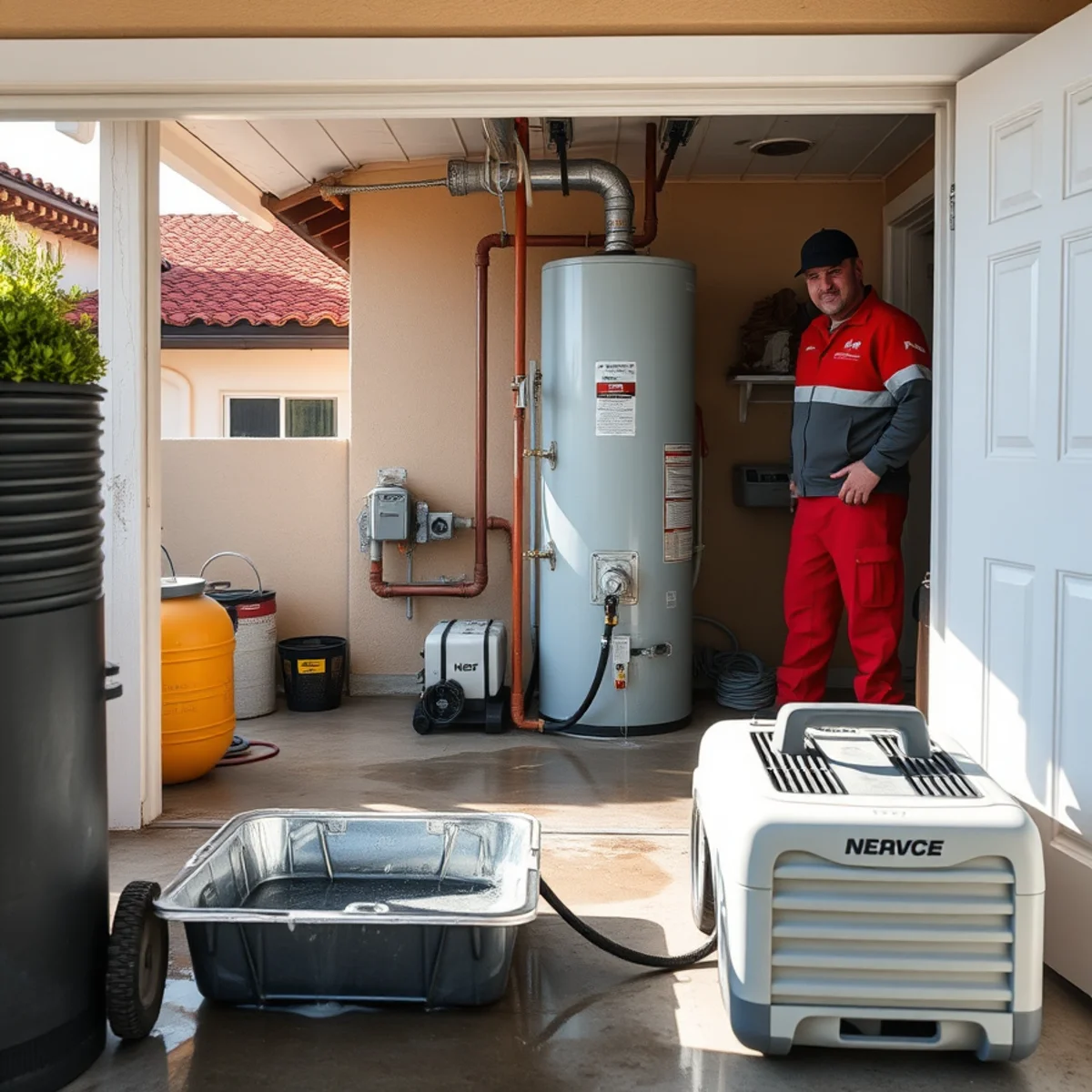
When to Replace Washing Machine Hoses, Water Heaters, and Supply Lines
Washer hoses, water heaters, and supply lines fail on a predictable schedule. Replace them by age instead of waiting for the burst, and skip the flooded room entirely.
 Prevention
The 10-Minute Monthly Leak Inspection: Everywhere Water Hides
Most water damage starts as a drip you never saw. A deliberate ten-minute walk once a month catches small leaks while they are still cheap to fix. Here is the room-by-room routine.