
Water Heater Flooded the Garage: Emergency Steps Before Help Arrives
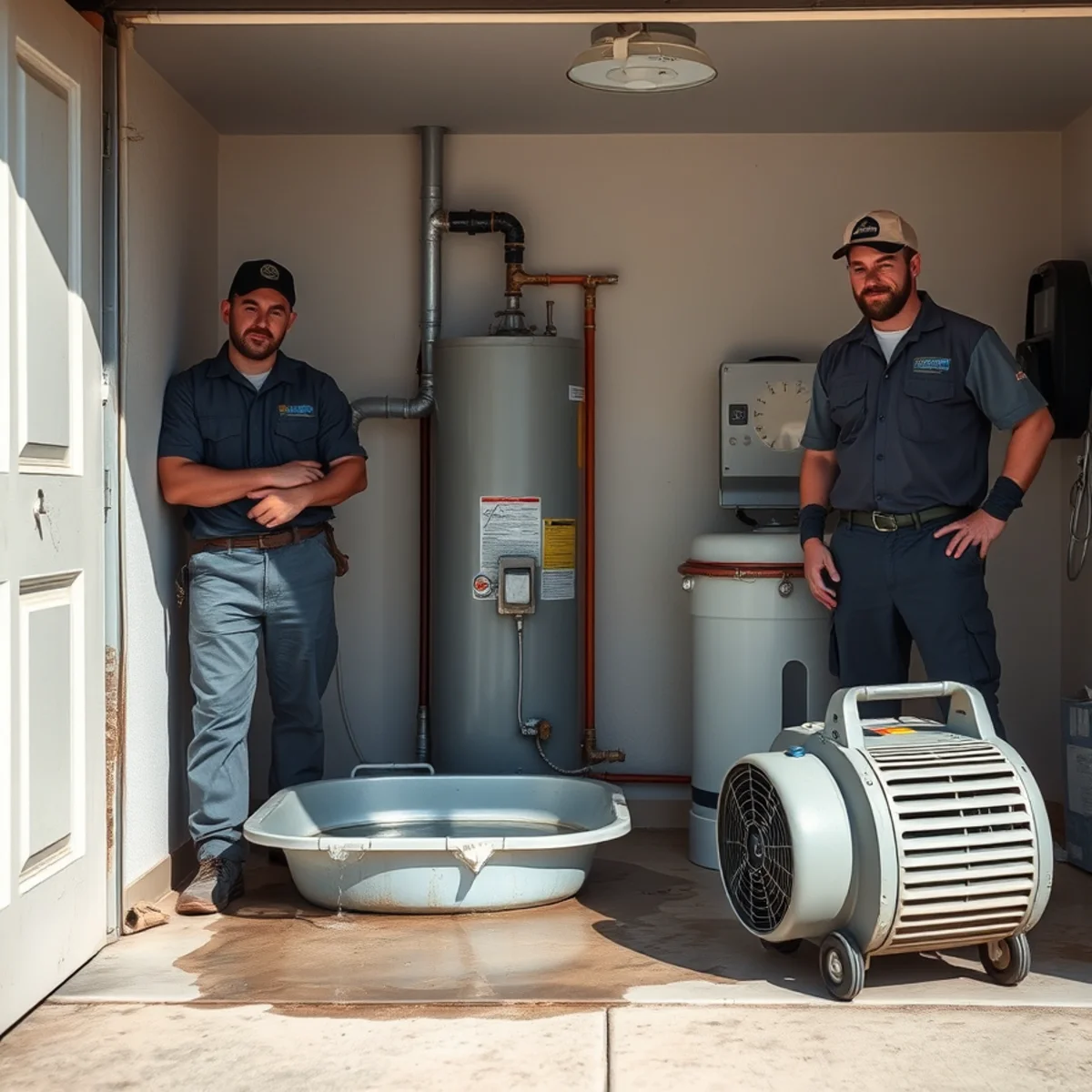
You open the garage door and step into an inch of water. The water heater in the corner is weeping from the base, the floor is soaked, and the boxes at the bottom of the stack are already wet. A standard tank holds 40 to 50 gallons, and if the tank itself has ruptured, it will keep refilling and dumping until you shut off the supply.
Garages take the hit first, but they rarely take it alone. Water follows the slab under the door into the house, seeps beneath drywall, and soaks the bottom plates of shared walls. In a historic home in the Upper East, where an attached garage may sit against original plaster and framing, that migrating water can reach living space before you notice.
Move quickly and in order. Stop the water, remove the ignition source, then limit where it spreads.
Step 1: Shut Off the Water to the Heater
Look for the shutoff valve on the cold-water line entering the top of the tank, usually a lever or a round handle. Turn it off. If that valve is stuck or leaking, shut off the main valve for the whole house instead. Stopping the supply is what ends an actively refilling flood, so it comes before anything else.
Step 2: Turn Off the Gas or Electricity
For a gas water heater, turn the gas control knob to the off position, and if you can safely reach it, close the gas shutoff valve on the supply line. For an electric unit, switch off its dedicated breaker in the panel. A heater that keeps firing after the tank drains can crack the tank or burn out the elements, and you do not want an ignition source anywhere near standing water.
Expert tip
Know which fuel your heater uses before trouble hits. Gas units have a burner access panel near the floor and a vent flue on top. Electric units have a thick cable and no flue. That one detail changes which switch you reach for first.
Step 3: Relieve Pressure and Drain Safely
Open a hot-water faucet inside the house to relieve pressure in the tank and lines. Be careful, the water can still be scalding. If the tank is intact but leaking from a fitting, this reduces the flow while you wait for help. Do not try to drain a full tank across the garage floor; you will only add to the water you have to remove.
Step 4: Get Belongings Off the Floor and Document the Damage
Garages store the things water ruins fastest: cardboard boxes, paper, tools that rust, seasonal gear. Lift what you can onto shelves or carry it into the house. Pull wet items away from the wall so air can reach them. Then photograph and film everything before cleanup, including the heater, the water line, and the soaked belongings. Document everything for your claim; a burst or failed water heater is one of the most common covered water losses.
Step 5: Extract the Water and Dry the Structure
A squeegee and a wet/dry vacuum can move surface water toward the garage drain, but they will not pull moisture out of the slab, the drywall, or the wall plates. That takes professional gear. Our water heater leak cleanup crews extract the standing water, then set up structural drying and dehumidification to dry the slab and framing completely. When the flooding is severe or spreading into the house, emergency water removal gets a truck-mounted extractor on site fast.
Why Water Heaters Fail in This Area
Most tanks last 8 to 12 years, and Santa Barbara's water chemistry is not kind to them. Goleta and the coastal neighborhoods deal with hard water, and near the coast, salt air accelerates corrosion. Sediment builds in the bottom of the tank, rust eats through the steel, and the tank finally springs a leak or ruptures. If your heater is more than a decade old and the garage floor is staining, treat it as living on borrowed time. We serve homeowners across Goleta and the wider South Coast with the same 30-minute response.
- Rusty or discolored hot water
- Pooling or staining around the base of the tank
- Popping or rumbling sounds as sediment hardens inside
- A tank that is 10 years old or more
- Corrosion creeping around the fittings and the temperature-pressure valve
The Drying Cannot Be Skipped
Water that sits against a garage slab and shared walls does not simply evaporate. It wicks upward into drywall and framing, and in our coastal humidity it can feed mold within 24 to 48 hours. IICRC-certified technicians place air movers and LGR dehumidifiers, then verify with moisture meters that the structure is dry before they pack up. Coastal moisture makes that final verification non-negotiable.
A flooding water heater is loud, messy, and fast, but the response is simple: shut off the water, kill the gas or power, document the scene, and get the water extracted and the structure dried before mold sets in. Restore Santa Barbara is IICRC-certified, licensed, bonded, and insured, and we work directly with your adjuster from start to finish. If your water heater has let go, call (201) 277-9344 now. A live person answers around the clock, and a local crew will be on the way within 30 minutes.
Frequently Asked Questions
Is a leaking water heater covered by homeowners insurance?
How much water is in a typical water heater?
Should I turn off the gas to a leaking water heater?
Can I just let the garage floor air dry?
Services in this article
Areas we serve
Keep reading
 Emergency Guide
What to Do in the First 24 Hours After Water Damage
The first day after water damage decides how bad it gets. Mold can start within 24 to 48 hours, and insurers expect fast action. Here is exactly what to do — and what not to do — in the first 24 hours.
 Emergency Guide
Dishwasher Leaked Overnight and Flooded the Kitchen — Now What?
You wake to water across the kitchen floor and a dishwasher to blame. Here is how to stop the source, get the water out from under the cabinets, and dry it before mold sets in.
 Emergency Guide
Standing Water in the House: Is It Safe to Stay, and Who to Call First?
Standing water in your home raises an urgent question before cleanup even begins: is it safe to stay? The answer depends on the electricity, the contamination, and the structure.