
Washing Machine Supply Line Burst: 5 Steps to Limit the Damage
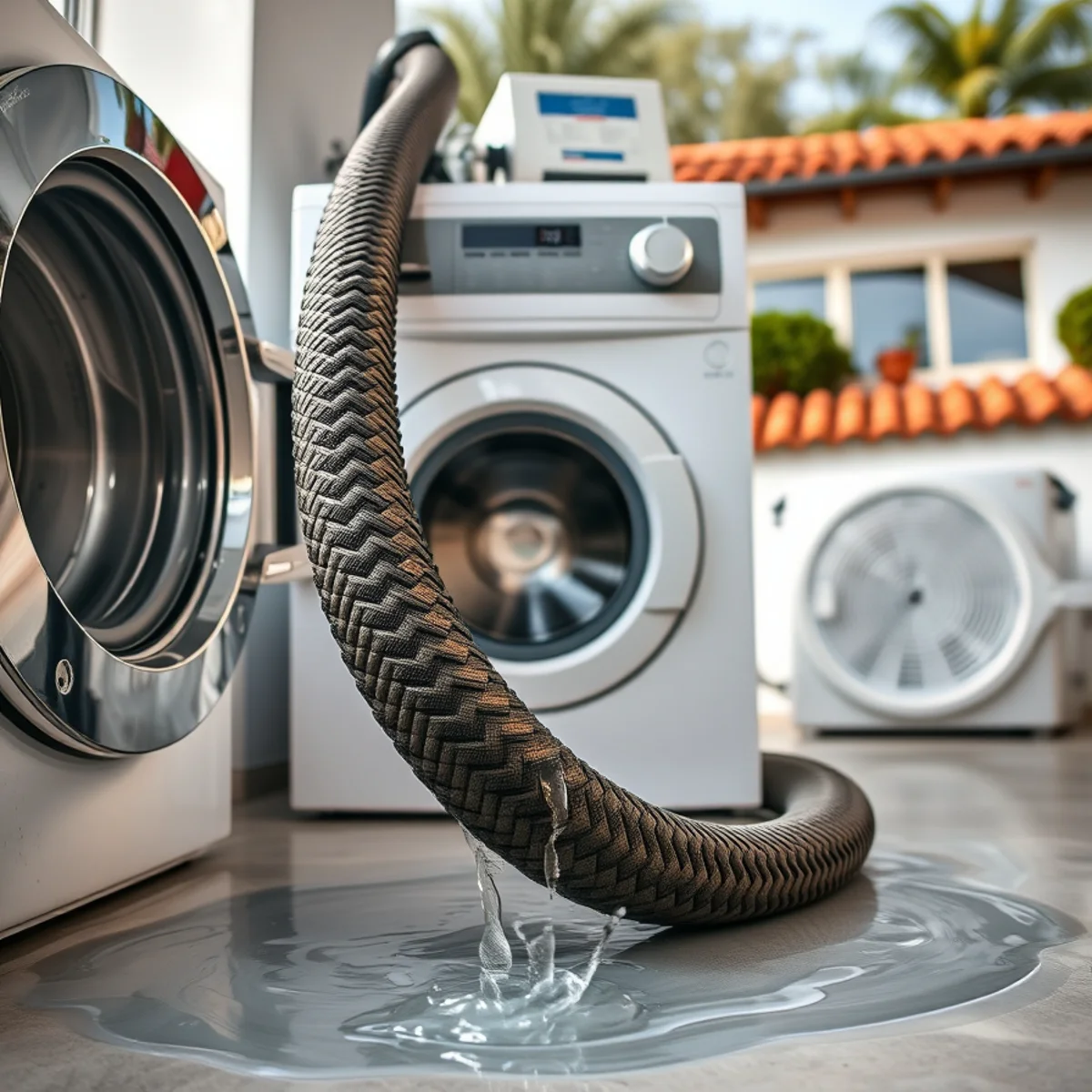
You walk into the laundry room and the floor is a shallow lake. A supply hose behind the washing machine has burst, and because those hoses stay pressurized whenever the valve is open, it does not stop on its own. A failed washer line can put hundreds of gallons on the floor before anyone notices, which is why it is one of the most common and costly water losses in a home.
Laundry rooms are rarely sealed off. Water slides under the wall into the hallway, soaks the subfloor, and if the laundry is upstairs it comes through the ceiling below. In a coastal cottage on The Mesa, where salt air already works on plumbing fittings, a hose or valve that has been slowly corroding can let go without warning.
Here are the five steps, in order.
Step 1: Shut Off the Water Supply
Behind the washer are two valves, hot and cold, where the hoses connect to the wall. Turn both clockwise to off. If they are stuck, or you cannot reach them behind a heavy machine, shut off the main valve for the house. Stopping the water is the step that ends the flood, so do it before anything else.
Step 2: Unplug the Machine, Carefully
A washing machine is a large appliance plugged into a standard outlet, often near floor level. If the plug and outlet are dry and you can reach them without standing in water, unplug the machine. If water has reached the outlet, do not touch it; go to the breaker and switch off the laundry circuit instead.
Step 3: Contain and Extract the Water
Block the water from spreading with towels and start moving it out. A wet/dry vacuum is far more effective than a mop for standing water. Work from the edges inward and toward a door or floor drain. The faster you get the surface water up, the less soaks into the floor and the walls.
Expert tip
Replace rubber washing machine hoses every five years, and consider braided stainless-steel lines, which resist bursting far better. Better still, close the supply valves whenever you are away for more than a day or two. A hose cannot burst under pressure it is not holding.
Step 4: Document Everything for Your Claim
Before the cleanup goes further, photograph and film the burst hose, the machine, the standing water, and any damaged flooring, baseboards, or belongings. Document everything. A sudden hose failure is typically a covered loss, and clear images make the claim straightforward. Keep the failed hose rather than throwing it away, as evidence of what happened.
Step 5: Dry the Structure Completely
This is the step people skip, and it is the one that prevents the expensive second problem. Surface water is only part of it. Moisture wicks into subfloor, wall plates, and cabinetry, where a household fan cannot reach it. Professional water extraction pulls the water out of the flooring and structure, and structural drying and dehumidification with air movers and LGR dehumidifiers dries the framing to a verified moisture level. When the flood is large or has spread into other rooms, emergency water removal gets a crew and a truck-mounted extractor on site within 30 minutes.
Why Washer Lines Fail, and How to Spot Trouble Early
Washing machine hoses live under constant pressure and take a beating from the machine's vibration. Rubber hardens and cracks with age, connections loosen, and in coastal neighborhoods salt air corrodes the fittings from the outside in. The Westside's older housing stock adds another factor: aging galvanized plumbing that raises pressure and stress on every connected line. We respond quickly across the Westside and its surrounding streets when a laundry line gives way.
- Bulges, blisters, or soft spots in a rubber hose
- Rust or corrosion at the hose connections
- Dampness, staining, or a musty smell behind the machine
- Hoses that are more than five years old
- Kinked or overstretched lines from a machine pushed too close to the wall
Coastal Moisture Makes Drying Urgent
Santa Barbara's marine layer keeps indoor humidity high, and mold can begin growing on damp materials within 24 to 48 hours. A laundry room that feels dry on the surface can hold moisture in the subfloor and wall cavities for weeks. IICRC-certified technicians confirm with moisture meters and thermal imaging that the structure is fully dry, not just dry to the touch, before they finish the job.
A burst washer hose floods fast, but the response is straightforward: shut off both valves, kill the power safely, extract the water, document the damage, and dry the structure completely. Restore Santa Barbara is IICRC-certified, licensed, bonded, and insured, and we work directly with your adjuster from the first photo to the final reading. If a supply line has flooded your laundry room, call (201) 277-9344. A live person answers day or night, and a local crew is ready to roll.
Frequently Asked Questions
How much water can a burst washing machine hose release?
How often should washing machine hoses be replaced?
Is a burst washing machine hose covered by insurance?
Do I need professional drying after a washer flood?
Services in this article
Keep reading
 Emergency Guide
What to Do in the First 24 Hours After Water Damage
The first day after water damage decides how bad it gets. Mold can start within 24 to 48 hours, and insurers expect fast action. Here is exactly what to do — and what not to do — in the first 24 hours.
 Emergency Guide
Dishwasher Leaked Overnight and Flooded the Kitchen — Now What?
You wake to water across the kitchen floor and a dishwasher to blame. Here is how to stop the source, get the water out from under the cabinets, and dry it before mold sets in.
 Emergency Guide
Standing Water in the House: Is It Safe to Stay, and Who to Call First?
Standing water in your home raises an urgent question before cleanup even begins: is it safe to stay? The answer depends on the electricity, the contamination, and the structure.