
Tree Roots in Your Sewer Line: Warning Signs to Catch Before the Backup

A sewer line does not usually fail all at once. It fails slowly, over months, as tree roots work their way into the pipe and tighten their grip. By the time sewage is on the bathroom floor, the roots have been growing for a long time.
That slow timeline is actually good news, because it means there are warning signs. Most homeowners miss them or explain them away as minor annoyances. Learn to read them, and you can have the line cleared on your schedule instead of during an overflow at midnight.
Why tree roots love your sewer line
A sewer lateral is warm, full of nutrients, and often slightly leaky at the joints. To a nearby tree, that is an irrigation line. Roots find the tiny seepage at a pipe joint or hairline crack, push in, and then keep growing inside the pipe, forming a mesh that catches paper and grease until flow chokes off.
This is especially common with the clay-tile sewer laterals under many older Santa Barbara homes. Clay comes in short sections with many joints, and decades of ground movement leave gaps that roots exploit. Big, mature trees make it worse, and this city has plenty of them.
The early warning signs, in order
1. Gurgling sounds from drains or toilets
One of the first symptoms. When you flush or drain a sink, you hear gurgling from a toilet or the shower. That is air trapped by a partial blockage escaping back through the water. It is easy to ignore, and it is often the earliest clue.
2. Slow drains throughout the house
Not one slow sink, but several fixtures draining sluggishly at once. A single slow drain is usually a local clog. Multiple slow drains point to a restriction in the shared main line, which is where roots grow.
3. Recurring clogs that keep coming back
You snake a drain, it works for a few weeks, then it clogs again. Roots regrow, and a snake only shears them off temporarily. A clog that returns on a schedule is a strong sign of root intrusion.
4. Sewage odor near drains or in the yard
A persistent sewage smell, indoors near a floor drain or outdoors along the path of the lateral, means waste is escaping or backing up. Do not mask it. Trace it.
5. Unusually lush patches over the sewer line
A strip of grass that is greener and faster-growing than the rest of the lawn can mean a cracked line is fertilizing the soil above it. Combined with the other signs, it helps locate the break.
Expert tip
Keep a simple log. Note the date every time a drain backs up or you snake a line. If the interval between clogs is shrinking, the root mass is growing, and you are heading for a full backup.
What happens if you ignore it
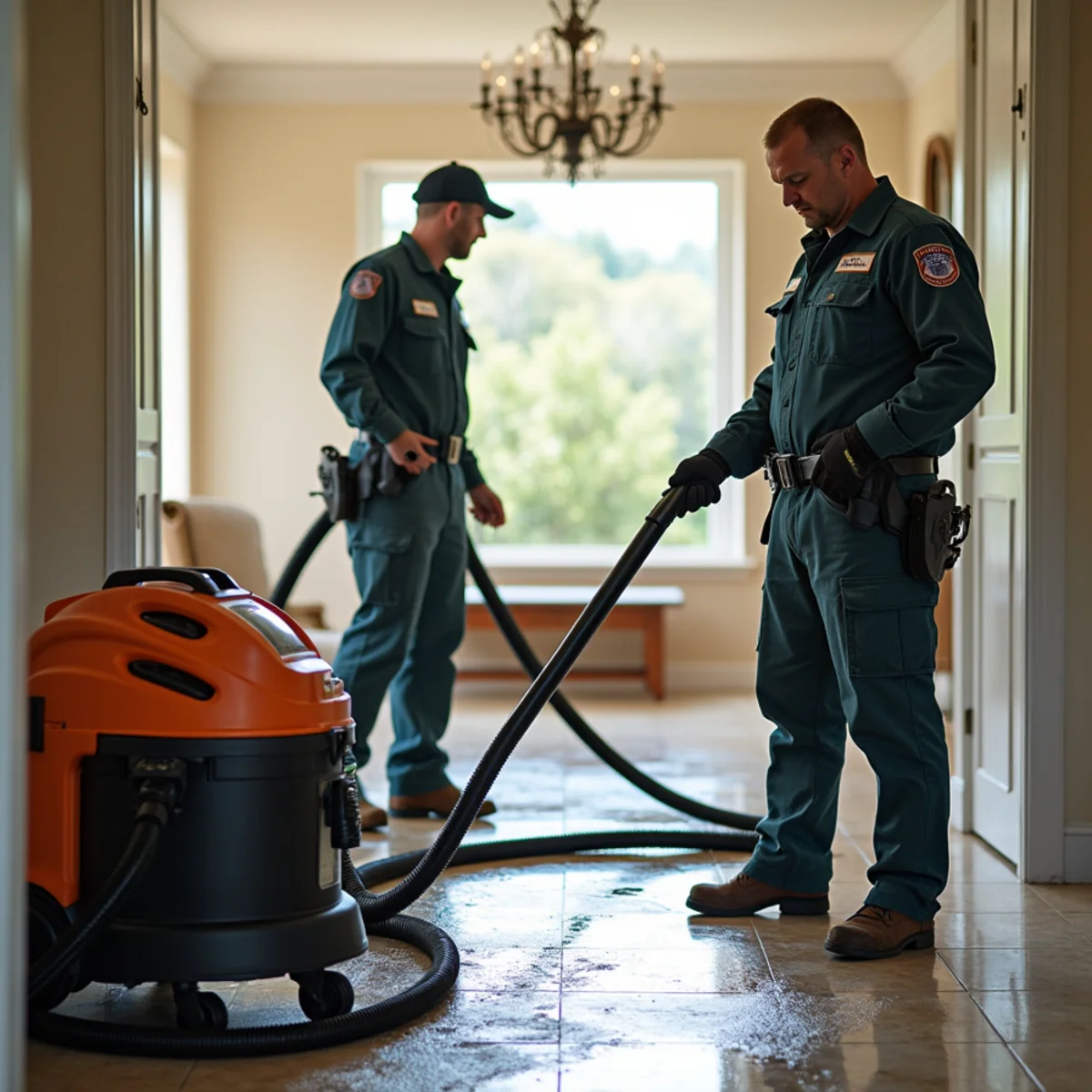
The roots keep thickening until flow stops entirely. Then the line backs up and sewage surfaces at the lowest drain, which becomes a Category 3 black-water event inside the home. At that point you need emergency water removal to get the contaminated water out fast, followed by full sewage cleanup with disinfection and removal of anything porous the water reached.
Catching it early
The move is to confirm the problem before it overflows. Camera line inspection and leak detection sends a camera down the lateral to see exactly where the roots are entering and how bad the intrusion is, so the line can be cleared and repaired on your terms instead of during a crisis.
We see this pattern across the historic estates of the Upper East, where large oak trees shade some of the city's oldest homes, and along the palm-lined hillsides of Samarkand, where mature landscaping on larger lots sends roots reaching toward aging laterals.
How the problem actually gets fixed
Once a camera confirms roots, the repair depends on how far it has gone. A light intrusion can be cut back and the line hydro-jetted clean. A cracked or offset section usually needs a spot repair, and a badly damaged clay lateral may need relining or replacement. The camera footage tells us which, so you are not paying to dig up a pipe that only needed cleaning.
Clearing the roots is not a permanent fix on its own, because roots regrow toward the same water. Pairing a thorough cleaning with a repair of the entry point, or relining the pipe, is what keeps the backup from returning next season.
Act on the early signs
Gurgling drains, repeat clogs, and slow fixtures are your sewer line asking for help. Catch them early and a root problem is a scheduled repair. Ignore them and it becomes a sewage backup. If your drains are showing these signs, call Restore Santa Barbara at (201) 277-9344. We can inspect the line, and if it has already backed up, we answer at any hour and dispatch a crew fast.
Frequently Asked Questions
What are the first signs of tree roots in a sewer line?
How do tree roots get into a sewer pipe?
Will snaking the drain fix tree roots for good?
Services in this article
Areas we serve
Keep reading
 How-To
The Water Damage Restoration Process: What to Expect, Step by Step
Once the water is stopped, what actually happens next? Here is the full water damage restoration process, step by step, with a realistic timeline so you know what to expect from the first moisture reading to the final coat of paint.
 How-To
DIY vs. Professional Water Damage Restoration: When to Call a Pro
Some water you can clean up with a mop and a box fan. Some will cost you thousands in hidden mold if you try. The deciding factor is not how handy you are — it is the water, the clock, and how far it spread.
 How-To
How to Choose a Water Damage Restoration Company in Santa Barbara
After a water loss, the company you hire in the first hour shapes how much of your home gets saved — and whether your insurance claim goes smoothly. Here is exactly what to verify before you let anyone start pulling up floors.