
Why Shop-Vaccing a Flooded Carpet Isn't Enough
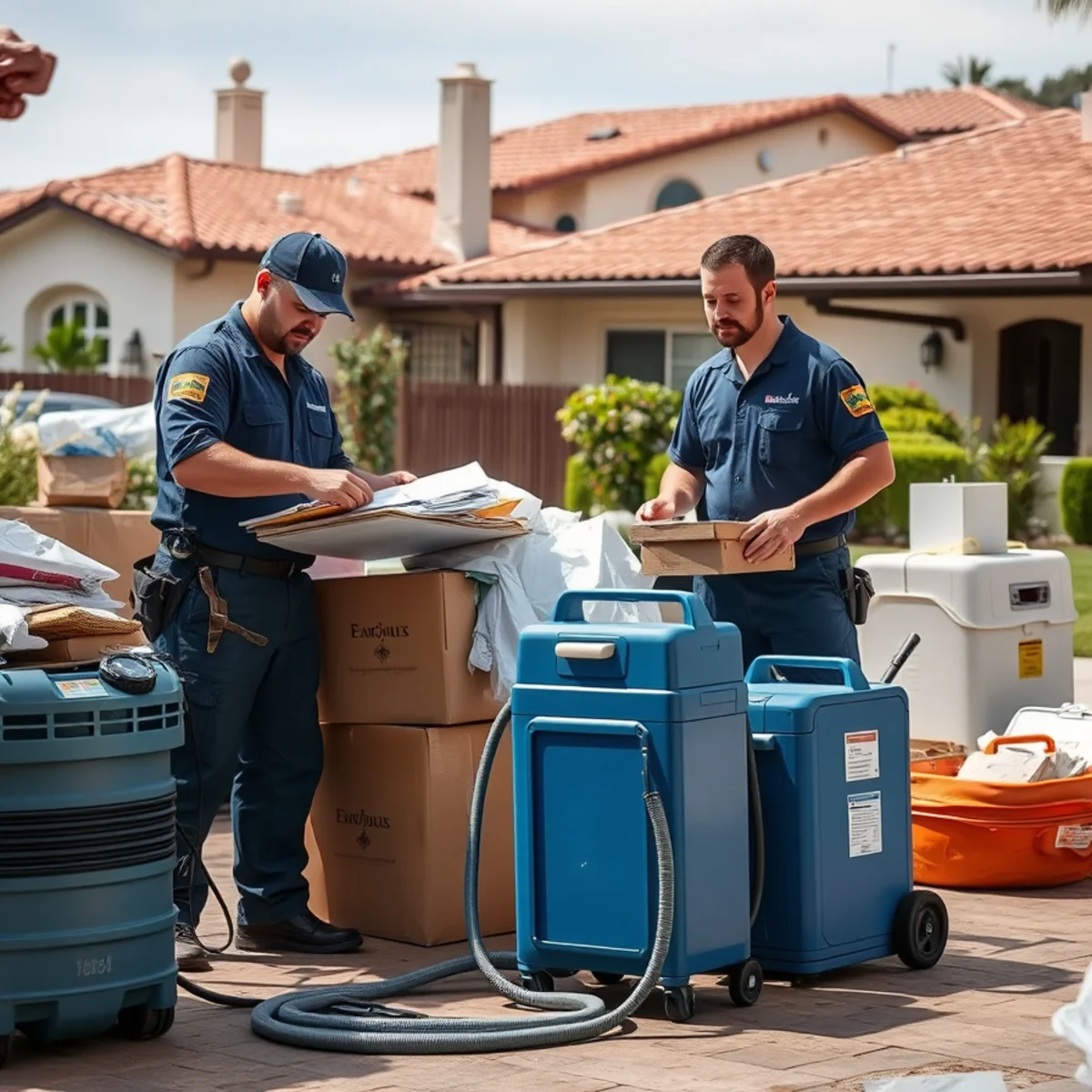
A supply line lets go, or the washing machine overflows, and suddenly the carpet is soaked. You grab the shop vac and go to work. After an hour, the surface feels damp but not wet, so you set up a box fan and call it done.
Three weeks later, there is a musty smell and a dark edge creeping along the baseboard. The water never really left. It just went where you could not see it.
What a shop vac actually removes
A shop vac pulls standing water off the surface of the carpet. That is genuinely useful in the first minutes of a leak, getting surface water up fast limits the spread. But surface extraction is where a shop vac stops, and it is nowhere near the whole job.
Carpet is only the top layer of a system. Under it sits the pad, and under that, the subfloor. Water does not politely stay in the carpet fibers where the vacuum can reach. It sinks.
The three-layer problem
To understand why a shop vac is not enough, picture what a flooded floor really is:
- The carpet, the visible top layer, the only part a shop vac reaches well.
- The pad, a thick, sponge-like cushion underneath that soaks up and holds enormous amounts of water.
- The subfloor, plywood or, in older homes, plank subfloor that wicks moisture into the framing below.
The pad is the real trap. It can hold several times its weight in water, and a shop vac barely touches it. You can vacuum the carpet until it feels dry on top while the pad underneath stays saturated. That trapped water is what feeds mold and rots the subfloor.
How professionals extract water from carpet
The right way to extract water from carpet after a leak is to pull it from all three layers, not just the surface.
Truck-mounted and portable extractors generate far more suction than any shop vac, and specialized tools press the water up out of the pad and carpet together. In many cases, crews use weighted extraction heads that ride on top of the carpet and draw water from the pad below. When the pad is too far gone, it comes out entirely so the subfloor can be reached and dried.
That is the core of professional water extraction: removing the water you can see and the water you cannot, before it has time to migrate into walls and framing.
Extraction and drying are two different jobs
Even perfect extraction leaves moisture behind, in the subfloor, the tack strip, the bottom of the baseboards, and the lower wall. Removing standing water and drying the structure are two separate steps, and a box fan does not bridge the gap.
Proper structural drying and dehumidification uses commercial air movers to lift moisture off surfaces and LGR dehumidifiers to pull it out of the air, while moisture meters track the readings down to a dry standard. In Santa Barbara's coastal humidity, a household fan often just moves damp air around. Real drying requires equipment that actually removes water from the environment.
The mold clock is already running
Here is why none of this can wait. Mold can begin growing within 24 to 48 hours of a water event, and faster in our marine-layer humidity. A pad left wet under a carpet that feels dry on top is close to a perfect incubator: dark, damp, and undisturbed.
By the time the musty smell shows up, the growth is usually well established, and what could have been a drying job becomes a mold remediation job. We see this pattern constantly in homes from Hope Ranch to Samarkand, where a well-meaning shop-vac cleanup bought a few dry-feeling days and a much bigger problem later.
Can the carpet be saved?
Sometimes, yes, if you act fast and the water was clean.
- Clean water (Category 1), caught within a day or two: the carpet and often the pad can be dried and saved with professional extraction and drying.
- Grey water from an appliance: the carpet may be salvageable, but the pad usually comes out.
- Black water or sewage: the carpet and pad both go. Contaminated soft materials cannot be reliably disinfected.
Time is the deciding factor as much as the water type. The longer the pad stays wet, the lower the odds of saving anything under it.
Expert tip
In the first minutes, a shop vac is a fine head start, so pull up as much surface water as you safely can. Just do not mistake it for the finish line. Follow it immediately with professional extraction and drying, before the pad and subfloor lock the moisture in.
The bottom line
A shop vac removes surface water. It does not dry the pad, the subfloor, or the framing, and that hidden moisture is what causes the real damage. If a leak has soaked your carpet, extract it properly and dry it fully, fast, before the mold clock runs out.
Dealt with a flooded carpet and not sure it is truly dry? Call us at (201) 277-9344. Our IICRC-certified crew will check for hidden moisture, extract what a shop vac left behind, and dry it right. A live person answers day or night.
Frequently Asked Questions
How do you extract water from carpet after a leak?
Is a shop vac enough to clean up a flooded carpet?
Can a flooded carpet be saved?
How long before a wet carpet grows mold?
Services in this article
Areas we serve
Keep reading
 How-To
The Water Damage Restoration Process: What to Expect, Step by Step
Once the water is stopped, what actually happens next? Here is the full water damage restoration process, step by step, with a realistic timeline so you know what to expect from the first moisture reading to the final coat of paint.
 How-To
DIY vs. Professional Water Damage Restoration: When to Call a Pro
Some water you can clean up with a mop and a box fan. Some will cost you thousands in hidden mold if you try. The deciding factor is not how handy you are — it is the water, the clock, and how far it spread.
 How-To
How to Choose a Water Damage Restoration Company in Santa Barbara
After a water loss, the company you hire in the first hour shapes how much of your home gets saved — and whether your insurance claim goes smoothly. Here is exactly what to verify before you let anyone start pulling up floors.