
Santa Barbara Gets ~18 Inches of Rain, Almost All Nov-March. Is Your Home Ready?

Santa Barbara's weather has a way of making you forget it ever rains. Months of dry, sunny days roll by, the hills turn gold, and the roof you have not thought about since spring sits quietly baking in the sun. Then the first real storm arrives and finds every gap, every clogged gutter, and every tired flashing at once.
The problem is not the total amount of rain. We only get about eighteen inches a year. The problem is the timing. Almost all of it falls between November and March, and increasingly it arrives in concentrated bursts when an atmospheric river parks over the coast and drops weeks of rain in a couple of days. A home that is not ready does not fail gracefully under that kind of load.
Why Santa Barbara's rain pattern is deceptive
A climate that is dry three-quarters of the year trains everyone, including homeowners, to treat the roof and drainage as an afterthought. But the same dry stretch that lulls you is hard on a house. Sun and heat degrade roofing underlayment and sealants, sediment collects in gutters and drains, and soil pulls back from foundations. When months of that dry-season wear meets a single intense storm, small weaknesses become active leaks in an afternoon.
Start with the roof and gutters
Your roof is the first thing the season tests. Before November, clear leaves and debris out of the gutters and downspouts so water can actually leave the roof instead of backing up under the edges. Look for cracked or slipped tiles, worn or lifted flashing around chimneys and skylights, and any spot where the valleys collect debris.
Small roof problems are cheap to fix in October and expensive to ignore in January. Once water gets past the roofing, it becomes roof leak water damage that travels along framing and shows up as a stained, sagging ceiling far from where it actually entered.
Look hard at drainage and grading
Water has to have somewhere to go. Make sure the ground slopes away from the house, not toward it, and that area drains, swales, and any culverts are clear and flowing. This matters most on a slope. If your home sits on the hillside in the Riviera or up a canyon road in Toro Canyon, runoff from above concentrates on your property, and a blocked drain sends that water straight at your foundation or under your slab.
It pays to think one storm ahead. The first heavy rain after a long dry summer washes months of accumulated leaves, sediment, and grit into gutters and drains all at once, which is exactly when a marginal drain clogs and overflows. Clearing that debris in the fall, before it has a storm to move it, is some of the cheapest insurance a hillside home can buy.
Do not forget windows, doors, and the crawl space
Reseal weatherstripping around doors and windows, especially on the weather side of the house that takes the wind-driven rain. Check that crawl space and foundation vents are clear and that any sump pump actually runs when you test it. On our older raised-foundation homes, a wet crawl space in December quietly feeds mold under the whole house through the damp months.
A pre-season checklist
- Clear all gutters, downspouts, and roof valleys of leaves and debris
- Inspect the roof for cracked, slipped, or missing tiles and worn flashing, and address them before the rain starts
- Confirm the ground slopes away from the foundation and that yard and area drains run freely
- Reseal weatherstripping and caulk gaps around doors, windows, and roof penetrations
- Test the sump pump and clear crawl space and foundation vents
- Walk the interior and note any old ceiling or wall stains so you can tell a new leak from an old one
- Know where your main water shutoff is before you ever need it in a hurry
Expert tip
Do the walk-through in October, not during the first storm. Roofers, gutter crews, and drainage help are far easier to book before the rain than after every home in town springs a leak the same week.
When prep is not enough
Even a well-kept home can be overwhelmed by a strong atmospheric river, and hidden weaknesses do not always show themselves until water is already inside a wall. If you catch a musty smell, a fresh stain, or a soft spot after a storm but cannot find the source, professional leak detection uses moisture meters and thermal imaging to trace the water back to its entry point before it spreads.
The bottom line
Getting your home ready for the rainy season is mostly a matter of doing a few unglamorous jobs before November instead of after the first leak. Clear the water's path, seal the openings, and know where your shutoff is. If a storm does get the better of your home, call Restore Santa Barbara at (201) 277-9344 for storm damage cleanup. A live person answers day or night, and our IICRC-certified crew can be at most Santa Barbara homes within about thirty minutes.
Frequently Asked Questions
When is Santa Barbara's rainy season?
What is the most important rainy-season prep for a Santa Barbara home?
What should I do if my home leaks during a storm?
Services in this article
Areas we serve
Keep reading
 Local Santa Barbara
Spike in Your SB City Water Bill? You Might Have a Hidden Leak
An unexplained jump in your city water bill is one of the clearest signs of a hidden leak. Here is the 20-minute meter test to confirm it, and where leaks like to hide in older Santa Barbara homes.
 Local Santa Barbara
Tile Roofs and Water Damage: Why SB's Spanish Red Tile Isn't Always Waterproof
That classic Santa Barbara red-tile roof looks like it could last forever, and the tile nearly can. The waterproofing hidden underneath it cannot. Here is why Spanish tile roofs leak, and where to look before your ceiling does the telling.
 Local Santa Barbara
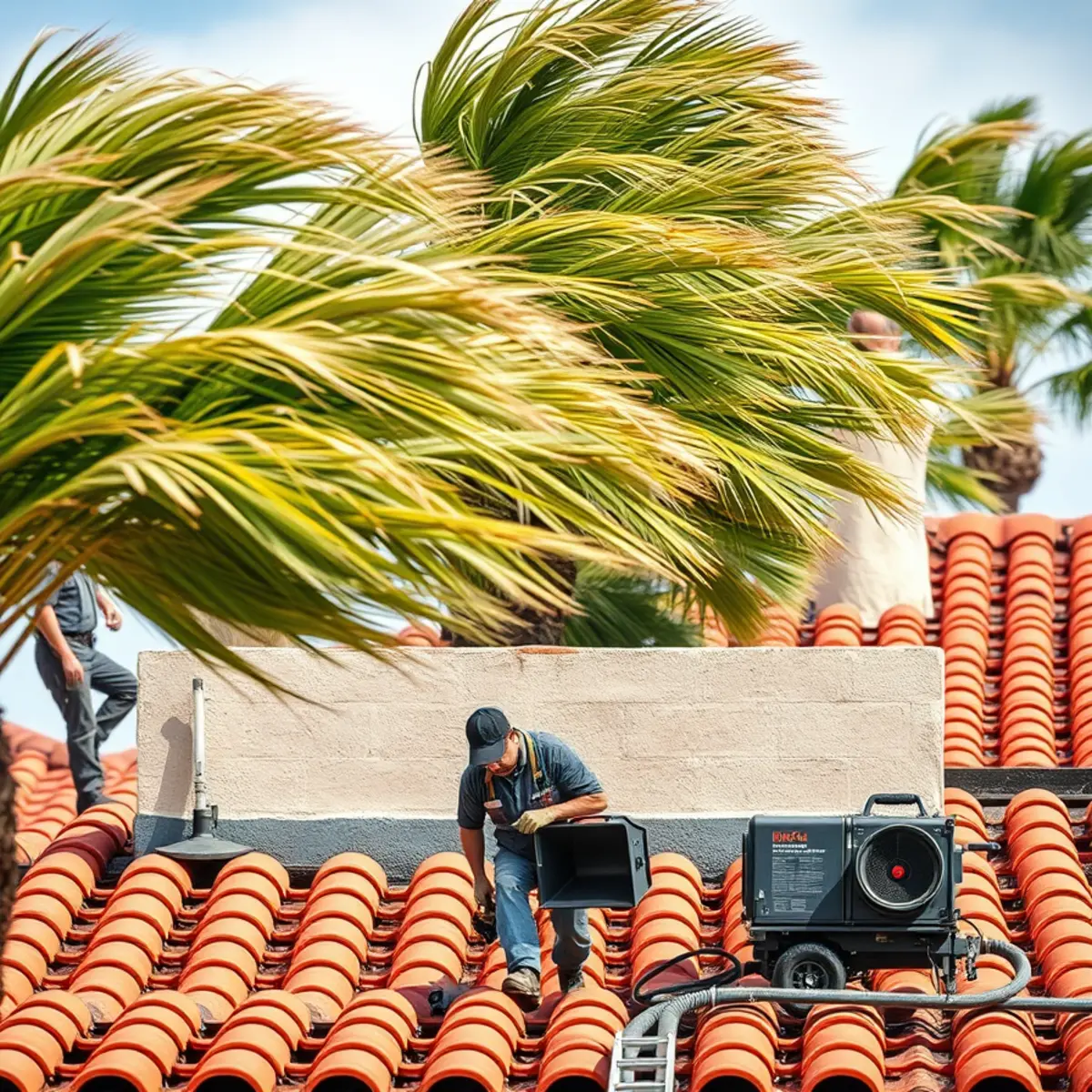
Santa Ana Wind Damage: How Winter Gusts Turn Into Roof Leaks
Santa Ana winds blow through dry and rainless, and your roof looks fine afterward. Then the next storm arrives and the ceiling starts dripping. Here is how winter wind events quietly set up roof leaks in Santa Barbara.