
Santa Ana Wind Damage: How Winter Gusts Turn Into Roof Leaks
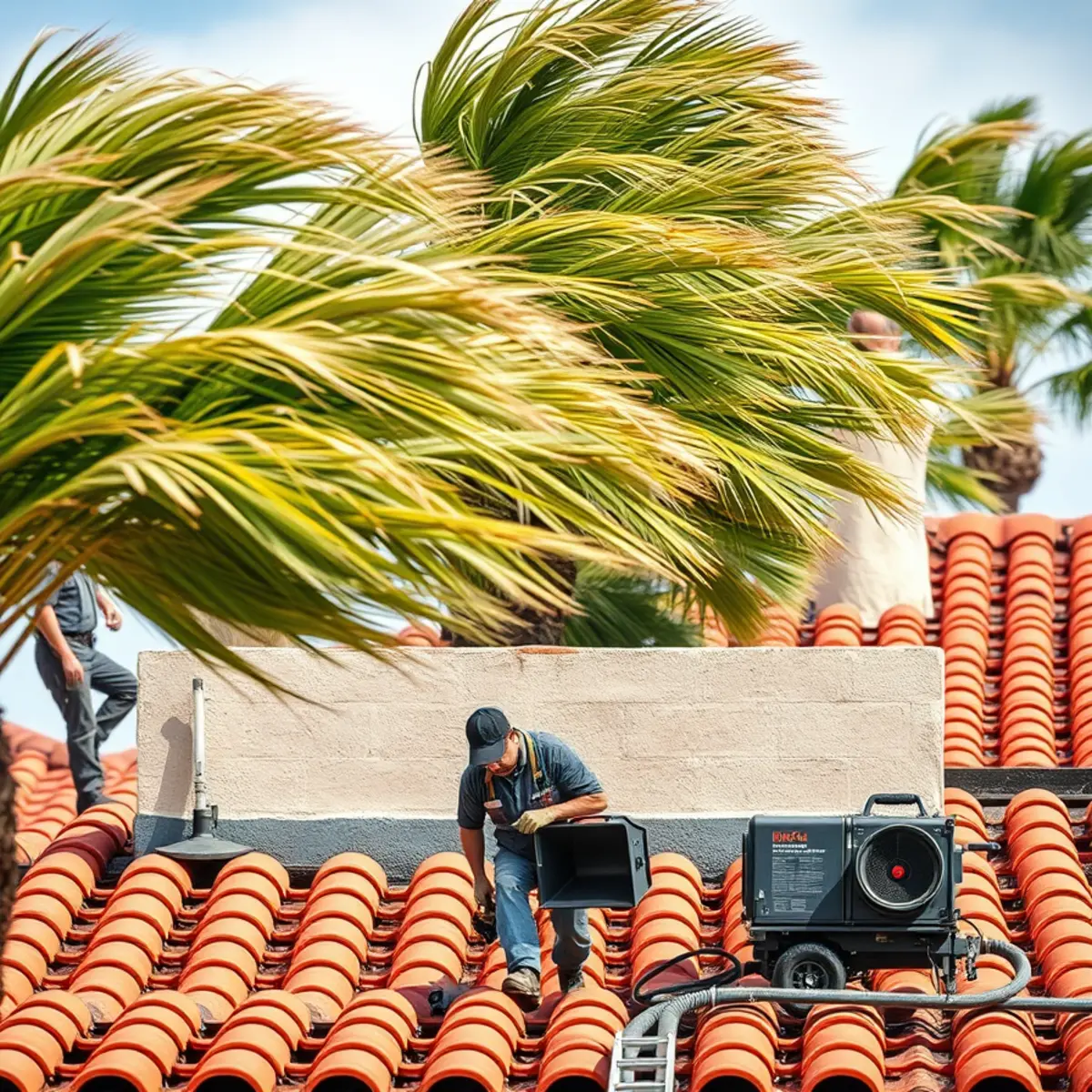
A Santa Ana wind event has a way of feeling like a non-event for your house. The wind roars through, dry and warm, for a day or two. No rain falls. You walk outside afterward, the roof looks exactly as it did before, you bring in the patio cushions, and you forget about it.
Then, weeks later, the first real storm rolls in and your ceiling starts to drip. The two things feel unrelated. They are not. The wind did the damage; the rain just found it.
What Santa Ana winds actually are
Santa Ana winds are dry, offshore winds. Instead of the usual cool, moist air coming in off the ocean, high pressure inland pushes hot, dry air the other direction, out toward the coast. As that air is forced down and through the mountains and canyons, it accelerates, and it can arrive in the foothills as hard, gusty wind. The key detail for your roof is that these winds bring no rain of their own. They arrive dry, do their work, and leave the sky clear, which is exactly why the damage goes unnoticed.
How wind damages a roof without a drop of rain
Wind works on the seams and edges of a roof, the places that keep water out. A strong, gusty Santa Ana can:
- Lift, crack, or slide clay and concrete tiles, breaking the overlap pattern that sheds water
- Loosen or peel back metal flashing around chimneys, skylights, walls, and valleys
- Tear or expose underlayment where a tile has shifted, removing the last waterproof layer
- Dislodge ridge caps and the mortar or fasteners that hold them
- Drive branches, debris, and grit across the roof, chipping and cracking tiles on impact
None of that leaks while the weather is dry. The roof looks intact from the street. But the waterproof system underneath now has gaps, and it is only a matter of time before the weather tests them.
Why the leak shows up weeks later
This delay is what fools people. A lifted tile or a loosened flashing is a gap, not a leak, until rain arrives to exploit it. When it finally does, water gets under the roofing and travels along framing and underlayment before it drops into a ceiling, often far from where it entered. By the time you see a stain spreading across the ceiling, water has already been moving through the structure. That is how a dry January wind becomes a wet February roof leak with water damage.
Exposed and hillside homes feel this most. A place perched on the Riviera or tucked into the foothills around Hitchcock catches the accelerated gusts coming down out of the canyons, so those roofs take the hardest wind loading and end up with the most lifted tiles and loosened flashing.
What to check after a big wind event
You do not need to climb onto the roof, and on tile you should not. Most of what matters can be checked safely from the ground and the attic.
- Walk the perimeter and look up: scan for obviously slipped, cracked, or missing tiles and any flashing that looks bent or lifted
- Check the ground and gutters for tile fragments or pieces of mortar, which are a sign something moved up top
- Go into the attic on the next clear day with a flashlight and look for daylight, water staining, or damp wood
- Watch your ceilings over the following weeks for fresh stains, especially after the first rain
- If anything looks off, get a roofer up there before the rain, not after the ceiling is already dripping
When the rain finds the gap
If you missed the window and a storm has already found the damage, move quickly. Water in a ceiling spreads and gets heavier, and a saturated ceiling can eventually sag or fail. Catch the drip in a bucket, move what you can out from under it, and get the intrusion addressed. Restoration handles the water side of this, ceiling water damage repair to dry and restore the ceiling and framing, along with broader storm damage cleanup, while a roofer closes the gap that let the water in.
Expert tip
Log the date of any big wind event. If a ceiling stain shows up after the next rain, that note helps you connect the leak to the wind that caused it, and it helps your adjuster understand the timeline when you file a claim.
The bottom line
Santa Ana winds are easy to shrug off precisely because they leave the sky clear and the roof looking fine. The smart move is to inspect after the wind, not after the leak. If a storm beats you to it and water is coming through a ceiling, call Restore Santa Barbara at (201) 277-9344. A live person answers day or night, and our IICRC-certified crew can be at most Santa Barbara homes within about thirty minutes to dry it out and stop the damage from spreading.
Frequently Asked Questions
Do Santa Ana winds cause roof leaks even without rain?
How can I tell if wind damaged my roof?
What should I do if my ceiling leaks after a storm?
Services in this article
Keep reading
 Local Santa Barbara
Spike in Your SB City Water Bill? You Might Have a Hidden Leak
An unexplained jump in your city water bill is one of the clearest signs of a hidden leak. Here is the 20-minute meter test to confirm it, and where leaks like to hide in older Santa Barbara homes.
 Local Santa Barbara
Tile Roofs and Water Damage: Why SB's Spanish Red Tile Isn't Always Waterproof
That classic Santa Barbara red-tile roof looks like it could last forever, and the tile nearly can. The waterproofing hidden underneath it cannot. Here is why Spanish tile roofs leak, and where to look before your ceiling does the telling.
 Local Santa Barbara
Coastal Moisture and Mold: Why SB Beach Homes Need Extra Vigilance
You do not need a flood to grow mold in a Santa Barbara beach home. The marine layer does plenty on its own. Here is why coastal moisture makes beach homes a mold risk, and the vigilance it takes to stay ahead of it.