
Coastal Salt Air Is Corroding Your Plumbing: What SB Homeowners Can Do
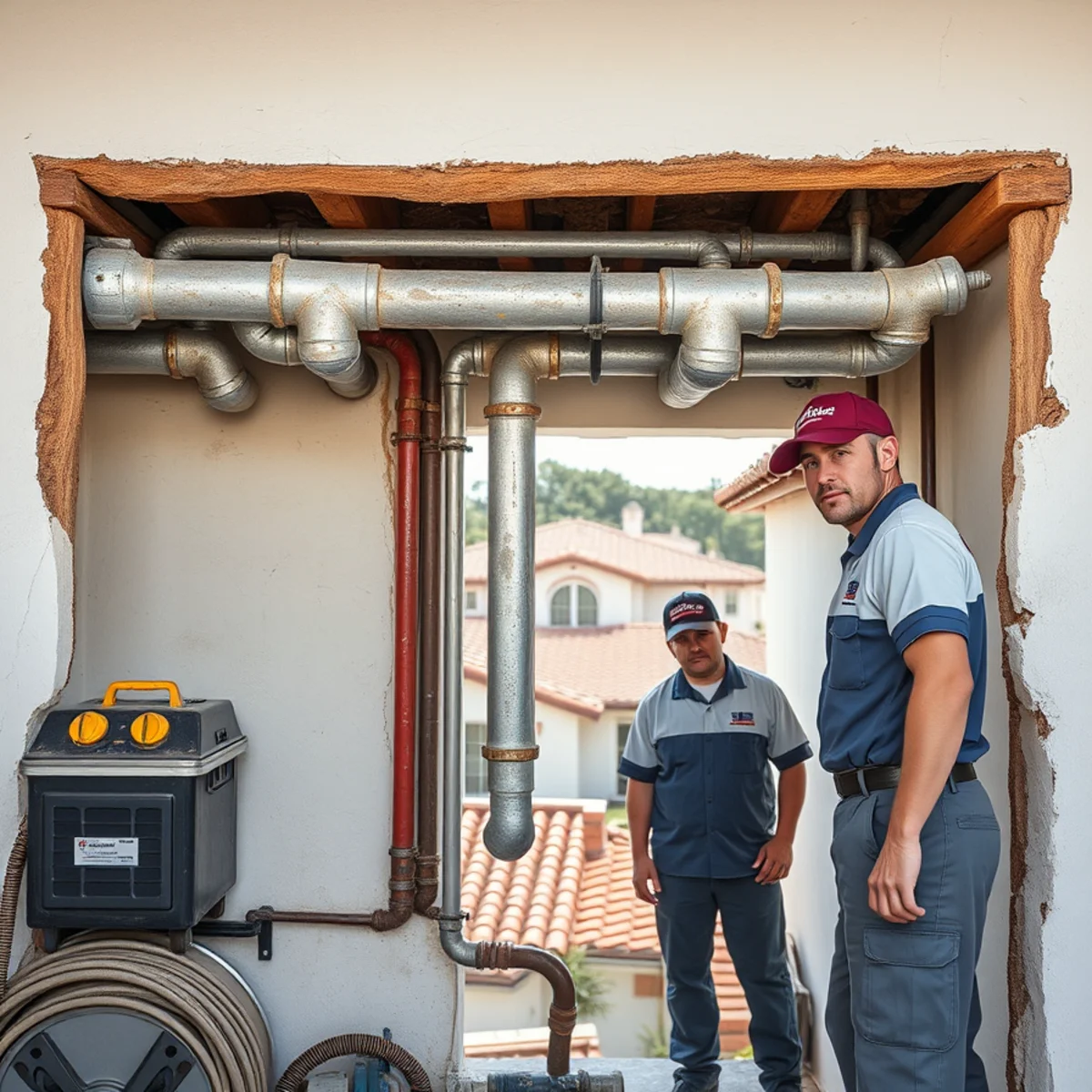
Coastal air is loaded with fine salt. You can feel it on a car left outside, on a gate latch that stiffens, on patio furniture that pits and streaks. That same chloride-heavy air works on the metal in your plumbing every day, and the closer your home sits to the water, the faster it happens.
Salt does not cause a dramatic overnight failure. It shortens the life of everything metal in the system, so parts that should last decades start weeping years early. In a beach-adjacent Santa Barbara home, corrosion is often the quiet reason behind a leak that seems to come out of nowhere.
How salt air attacks your plumbing
Chloride from ocean air accelerates corrosion on exposed metal, especially where two different metals meet and where fittings are threaded. Hose bibs, pressure regulators, exposed copper, galvanized nipples, and the tank and fittings on a water heater all sit in that salty air. Add our humid marine layer, which keeps surfaces damp for hours, and you have close to ideal conditions for rust and pitting.
Homes on the water take the worst of it. If you are up on The Mesa catching the onshore breeze, or down near the sand at East Beach, your fixtures and fittings simply weather faster than the same parts would a few miles inland.
It helps to be clear about what is actually happening. Salt does not eat metal directly. It makes the air and moisture around the metal far more conductive, which speeds up the ordinary electrochemical process of corrosion, and it does the most damage where two different metals are joined. Older Santa Barbara homes, with their mix of galvanized steel, brass, and copper, offer plenty of those dissimilar-metal joints for salt to work on, so corrosion tends to start at the fittings rather than in the middle of a run of pipe.
Where you will see corrosion first
The water heater
A water heater is a steel tank full of hot water sitting in salty, humid air, so it is often the first thing to go. Rust streaks down the tank, corrosion on the fittings, or a puddle at the base are all signs it is failing. When a tank finally lets go it can dump forty or more gallons at once, which is why a garage or closet failure turns into a water heater leak cleanup so quickly.
Slab and supply lines
Copper does not rust like steel, but salt-laden, humid conditions still promote the pitting that leads to pinhole leaks, including on lines buried in or under a concrete slab. A slab leak caused by pinhole corrosion can run undetected for weeks, surfacing only as a warm floor, a spike in the water bill, or a damp spot at the base of a wall.
What Santa Barbara homeowners can do
- Rinse exterior hose bibs, valves, and any exposed fittings with fresh water now and then, the same way you would rinse salt off a bike or a grill
- Have the water heater flushed on schedule and the sacrificial anode rod checked, since a spent anode lets the tank itself corrode
- Ask a plumber about dielectric unions where copper meets steel, which slows the galvanic corrosion that salt speeds up
- Keep an eye on exposed copper and galvanized fittings under sinks, at the heater, and at the main for green or white crust and rust staining
- Watch your water pressure and your water bill; both drift when corrosion starts to open the system
Signs corrosion has already become a leak
Green or chalky-white buildup on fittings, rust weeping from a threaded joint, low or dropping pressure, discolored water, or a musty smell under a cabinet all point to corrosion that has started to leak. Because the marine layer keeps everything damp, even a small weep can feed mold in a day or two, so it is worth confirming the source rather than waiting.
The reliable move is professional leak detection. Moisture meters and thermal imaging locate a corrosion leak inside a wall or under a slab without cutting into finished surfaces on a hunch, so any repair is targeted.
Expert tip
Corrosion works fastest on the parts you never look at. Once a year, take a flashlight to the water heater, the main shutoff, and the fittings under every sink. Catching a rusty weep early is the difference between a fitting swap and a flooded floor.
The bottom line
You cannot take the salt out of Santa Barbara air, but you can keep it from turning your plumbing into a slow leak. Rinse the exposed metal, service the water heater, and get any weep looked at before the marine layer turns it into mold. If a corroded line or tank has already let go, call Restore Santa Barbara at (201) 277-9344. We answer around the clock and can have an IICRC-certified crew on the way in minutes, whether you are on The Mesa or near the water at East Beach.
Frequently Asked Questions
Does salt air really damage indoor plumbing?
How can I slow salt-air corrosion on my pipes?
How do I know if corrosion has caused a hidden leak?
Services in this article
Areas we serve
Keep reading
 Local Santa Barbara
Spike in Your SB City Water Bill? You Might Have a Hidden Leak
An unexplained jump in your city water bill is one of the clearest signs of a hidden leak. Here is the 20-minute meter test to confirm it, and where leaks like to hide in older Santa Barbara homes.
 Local Santa Barbara
Tile Roofs and Water Damage: Why SB's Spanish Red Tile Isn't Always Waterproof
That classic Santa Barbara red-tile roof looks like it could last forever, and the tile nearly can. The waterproofing hidden underneath it cannot. Here is why Spanish tile roofs leak, and where to look before your ceiling does the telling.
 Local Santa Barbara
Santa Ana Wind Damage: How Winter Gusts Turn Into Roof Leaks
Santa Ana winds blow through dry and rainless, and your roof looks fine afterward. Then the next storm arrives and the ceiling starts dripping. Here is how winter wind events quietly set up roof leaks in Santa Barbara.