
How Long Does Structural Drying Take? A Room-by-Room Timeline
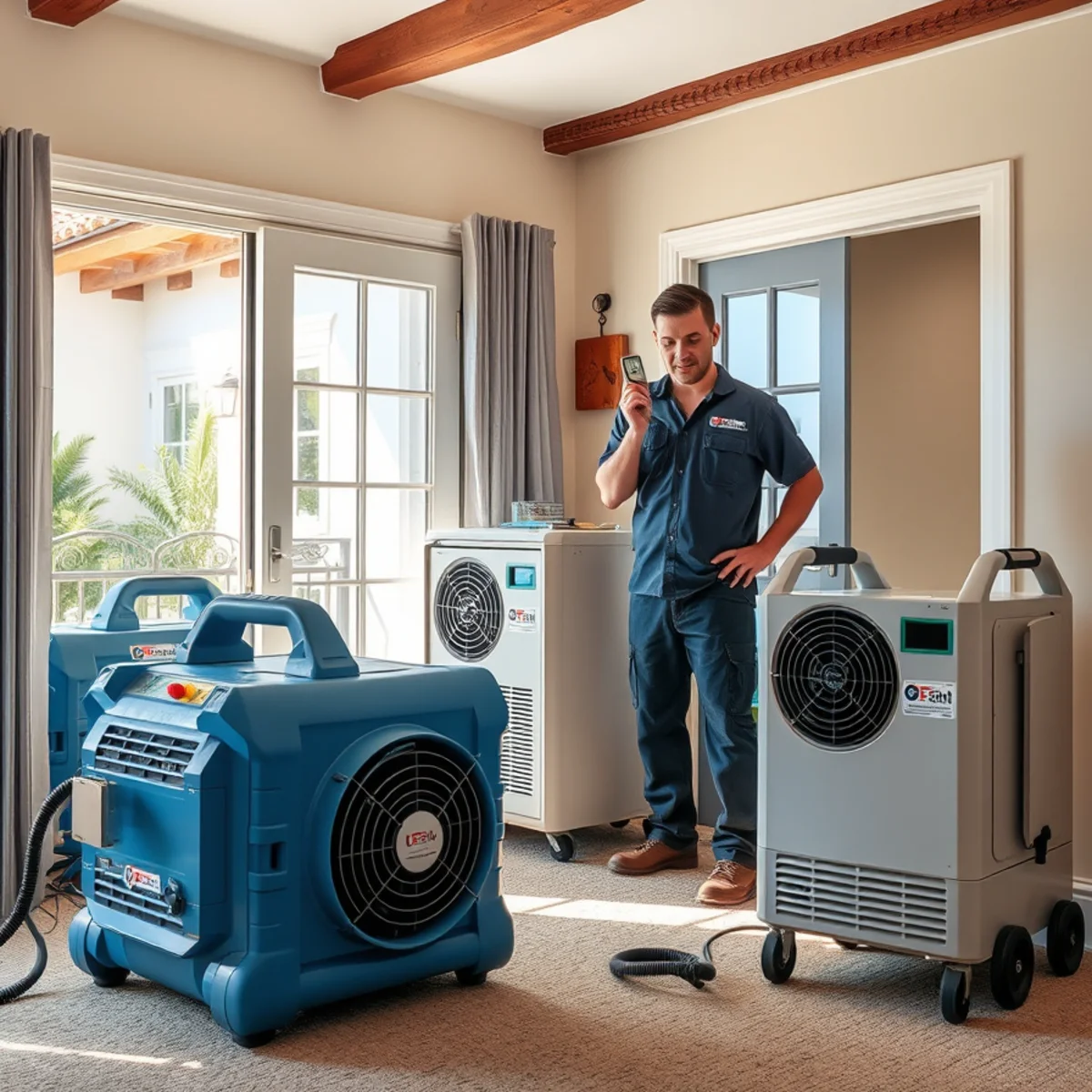
The water is extracted, the air movers are humming, and the dehumidifier is running in the corner. Now every homeowner asks the same thing: how long until this is dry and I can put my house back together?
It is a fair question, and the honest answer is a range, not a single number. Structural drying usually takes several days, and trying to shortcut it is how hidden moisture turns into mold and warped floors.
The short answer: usually three to five days
For most water losses, structural drying takes about three to five days. A small, clean-water spill caught early might dry in two. A large loss, or one involving hardwood, plaster, or saturated framing, can run a week or more.
That range assumes the drying starts fast and the right equipment is running the whole time. Every day of delay before extraction adds days on the back end.
What dry actually means
Drying is not done when the surface feels dry to the hand. It is done when the moisture content of the materials returns to a normal, dry standard, measured with a meter, not a fingertip.
That distinction is everything. Framing, subfloor, and plaster can read wet deep inside while the surface feels bone dry. A crew that packs up based on how a wall feels will leave moisture behind. A crew that meters daily and dries to a documented standard will not. The readings, logged each day, are also what tell your adjuster the job was done right.
What affects the timeline
Several factors decide whether you are looking at three days or ten:
- How much water, and how long it sat before extraction.
- The water category, since clean water dries faster than a contaminated loss that requires removal first.
- The materials, because drywall and carpet dry faster while hardwood, plaster and lath, and concrete hold water much longer.
- How far the water traveled, into wall cavities, under cabinets, and beneath flooring.
- Airflow and equipment, meaning enough air movers and dehumidifier capacity for the space.
- Ambient humidity, and on the coast, that is a real factor.
A room-by-room look
Bathrooms and kitchens
Hard surfaces like tile dry quickly, but water hides under cabinets, behind kickplates, and beneath the subfloor. These rooms often dry in three to four days once the trapped pockets are reached, longer if water got under the cabinetry.
Carpeted living areas and bedrooms
With fast extraction and the pad addressed, carpeted rooms usually dry in three to five days. If the pad stayed wet too long, replacement plus drying the subfloor extends it.
Hardwood floors
Hardwood is the patient one. Wood swells and cups when wet and gives up moisture slowly. Specialized drying systems help, but hardwood can take a week or more, and some cupping only resolves as it fully dries.
Plaster-and-lath walls
In the older homes common across neighborhoods like Bel Air Knolls and Hidden Valley, plaster over wood lath holds moisture deep. The surface dries first; the lath and framing behind it take longer. These walls reward patient, monitored drying and punish anyone who rushes them.
Crawl spaces and concrete
Raised foundations with crawl spaces trap coastal damp, and concrete slabs release moisture slowly. Both can extend a timeline well past the average and often need dedicated equipment aimed at the space.
Why coastal humidity adds time
Drying works by moving moisture from wet materials into the air, then pulling it out of the air with a dehumidifier. When the outside air is already humid, that second step works harder.
Santa Barbara's marine layer and coastal fog keep ambient humidity high much of the year, which is exactly why household fans and open windows do not dry a structure here. Effective structural drying and dehumidification seals the environment and uses LGR dehumidifiers to remove water from the air faster than the marine layer puts it back. It is also why local drying often runs a touch longer than the same job would in a dry inland climate.
Do not rebuild early
The most expensive mistake in a water loss is closing the walls too soon. New drywall, flooring, or paint over material that is not fully dry traps moisture and grows mold behind a finished surface, turning a drying job into a demolition job months later.
The sequence matters. Fast, thorough water extraction up front shortens the whole timeline by removing standing water before it migrates. Then patient drying to a verified standard. Only then does the rebuild begin. Full residential water damage restoration keeps those steps in order, so you rebuild once, on dry framing, instead of twice.
Expert tip
Leave the equipment running, even though it is noisy and adds to the power bill. Unplugging air movers or dehumidifiers overnight to save energy or quiet the house stretches the drying time and risks leaving moisture behind. The machines earn their keep only when they run continuously.
The bottom line
Structural drying usually takes three to five days, sometimes longer for hardwood, plaster, and crawl spaces, and a bit longer still in our coastal humidity. The finish line is a moisture reading, not a dry-feeling surface. Rushing it costs far more than the days it saves.
Water loss in your home and want it dried right the first time? Call us at (201) 277-9344. Our IICRC-certified crew extracts fast, dries to a verified standard, and shows you the readings. A live person answers day or night, and we dispatch within 30 minutes across Santa Barbara.
Frequently Asked Questions
How long does it take to dry out water damage?
How do you know when the structure is actually dry?
Why does drying take longer in Santa Barbara?
Can I speed up drying by turning off the equipment at night?
Services in this article
Areas we serve
Keep reading
 How-To
The Water Damage Restoration Process: What to Expect, Step by Step
Once the water is stopped, what actually happens next? Here is the full water damage restoration process, step by step, with a realistic timeline so you know what to expect from the first moisture reading to the final coat of paint.
 How-To
DIY vs. Professional Water Damage Restoration: When to Call a Pro
Some water you can clean up with a mop and a box fan. Some will cost you thousands in hidden mold if you try. The deciding factor is not how handy you are — it is the water, the clock, and how far it spread.
 How-To
How to Choose a Water Damage Restoration Company in Santa Barbara
After a water loss, the company you hire in the first hour shapes how much of your home gets saved — and whether your insurance claim goes smoothly. Here is exactly what to verify before you let anyone start pulling up floors.