
Why Your House Still Smells Musty After the Water 'Dried'
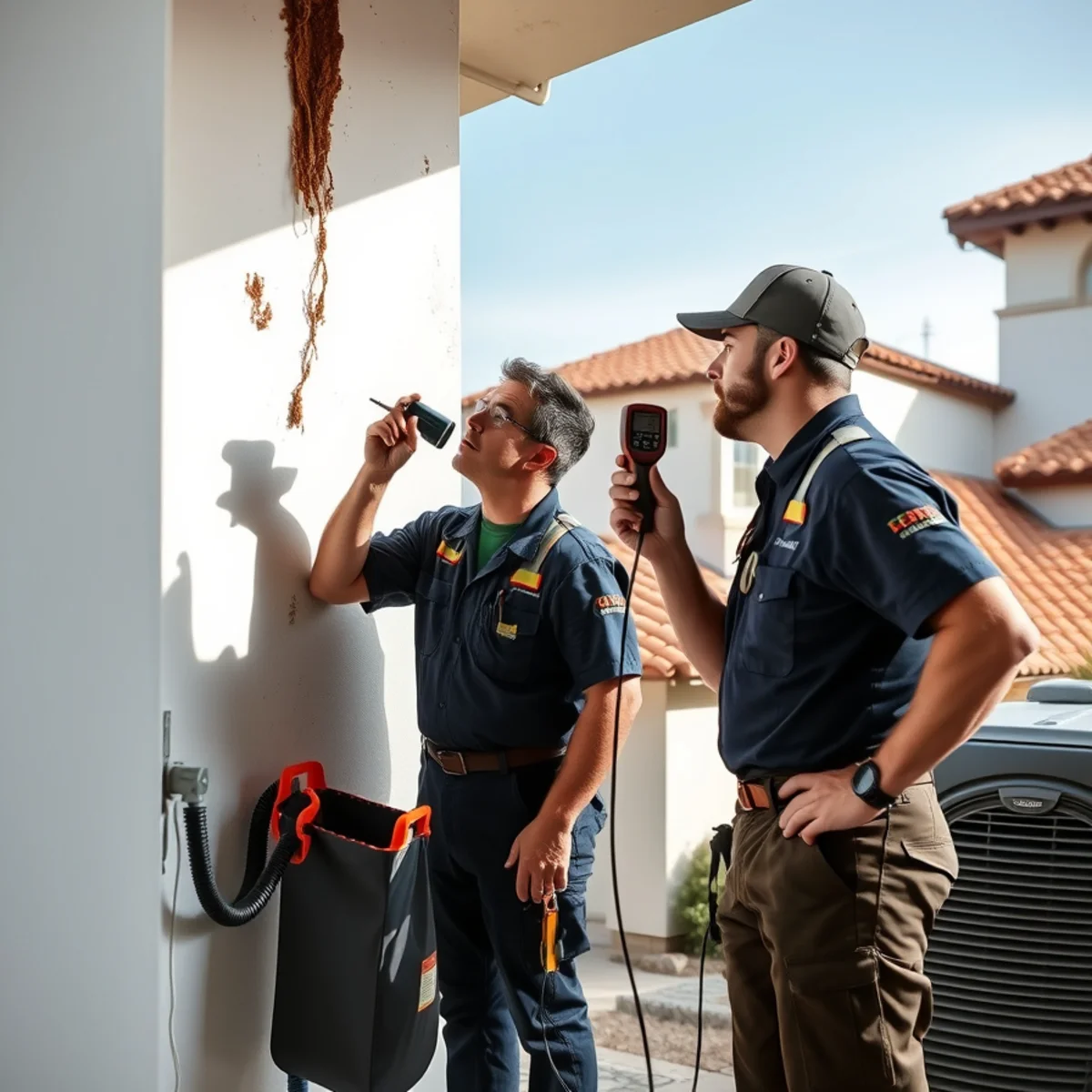
You mopped up the water. The carpet feels dry underfoot. Weeks later, a damp, earthy smell still hangs in the hallway, and it gets stronger when you close the house up overnight. That musty odor is not your imagination, and it is not going away on its own.
A smell that outlasts the visible water almost always means the material dried on the surface but stayed wet underneath. In Santa Barbara, the marine layer works against you here. Coastal moisture slows evaporation, so a wall that looks fine can hold water for weeks.
What that musty smell actually is
The odor is not the water itself. It is a byproduct of microbial growth. As mold and bacteria digest damp drywall, wood, and dust, they release microbial volatile organic compounds, or MVOCs. Your nose picks those up long before you see a spot on the wall. In other words, the smell is often the first hard evidence that mold has taken hold somewhere you cannot see.
Mold can begin growing within 24 to 48 hours of a material getting wet, and faster when coastal fog keeps indoor humidity high. So by the time a smell develops, colonization is usually well underway inside a wall cavity, under the flooring, or in the subfloor.
Why dry to the touch is not actually dry
There is a real difference between a surface that feels dry and a material that has reached its dry standard. Restoration pros dry to a measured target, not a feeling. The dry standard is the moisture content of similar, unaffected material in the same building, confirmed with a moisture meter, not a fingertip.
Drywall, framing lumber, and subfloor all hold water differently. A pinless meter reads moisture below the surface without punching holes; a pin meter confirms the reading inside the material. A wall can read normal on the painted face and still be saturated in the cavity behind it. That gap is exactly where the smell comes from.
Expert tip
If the smell gets stronger in a closed-up room or after you run the heater, that is a sign moisture is still evaporating out of the structure. Warm air pulls moisture and odor out of damp materials faster, which is why the problem seems to come and go.
The usual hiding spots
- Behind baseboards and the bottom foot of drywall, where water wicks upward
- Under carpet and the pad, which stay damp long after the surface fibers dry
- In the subfloor and floor joists below, especially over a crawl space
- Inside wall cavities, where wet insulation holds water against the framing
- Under and behind cabinets, vanities, and kitchen toe-kicks
How pros clear a musty smell for good
You cannot deodorize your way out of trapped moisture. Sprays and candles mask the MVOCs for an hour; the source keeps producing them. The fix is to find the wet material, dry it to standard, and remove anything already colonized.
- Map the moisture. We use moisture meters and a thermal imaging camera to flag temperature differences behind finishes, then confirm each spot with a meter.
- Open and dry the cavity. That can mean pulling baseboards, drilling weep holes, or making a controlled flood cut to reach wet insulation and framing.
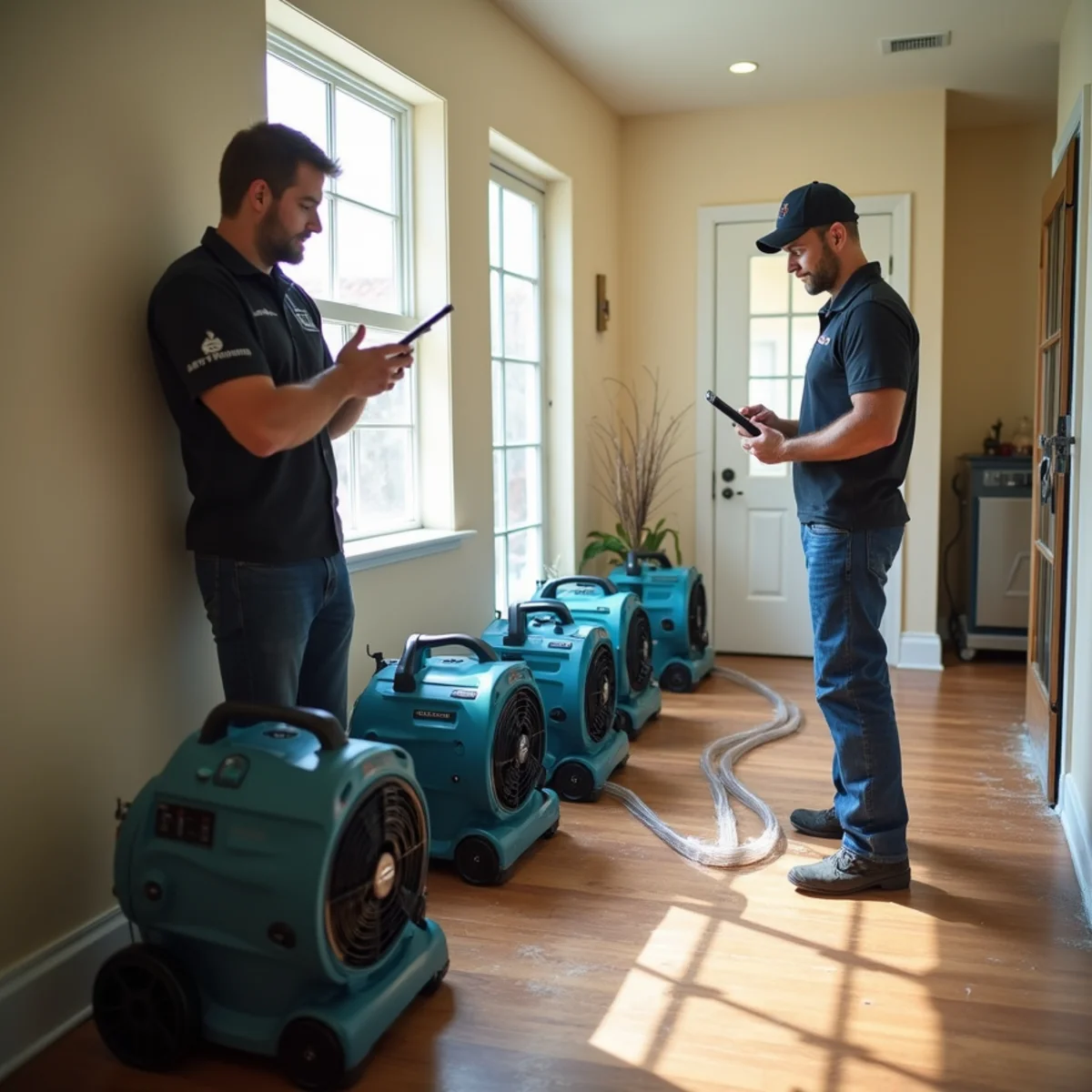
- Set the right equipment. Air movers push evaporation while LGR dehumidifiers pull that moisture out of the air, and we log readings daily until materials hit the dry standard.
- Remove what cannot be saved. Colonized drywall and saturated carpet pad come out, and remaining surfaces are treated with an antimicrobial and cleaned under HEPA filtration.
If the readings show the structure is still wet, professional structural drying and dehumidification is what actually resolves the odor. If we find growth behind the finishes, that crosses into mold remediation, which adds containment and HEPA air scrubbing so spores are not spread through the rest of the house.
When the smell means you still have a leak
Sometimes the odor never fully left because the water never fully stopped. A slow supply-line drip, a failing shower pan, or a hidden drain leak keeps feeding the same spot. If a musty area keeps coming back after drying, our leak detection service can pinpoint the source without opening up walls at random.
This is common in the older cottages and condos of East Beach, which carry the highest coastal-moisture exposure in the city, and along the salt-air bluffs of The Mesa, where humidity keeps damp materials from drying on their own.
Do not wait it out
A musty smell is a moisture problem with a clock on it. Every day the material stays wet, colonization spreads and the eventual repair grows. If your home still smells musty after a leak, do not cover it up. Call Restore Santa Barbara at (201) 277-9344. We answer the phone at 2 a.m., dispatch a local crew, and find the moisture your nose already told you was there.
Frequently Asked Questions
Why does my house still smell musty after everything looks dry?
Can a musty smell go away on its own?
How fast can mold start after a leak?
Services in this article
Areas we serve
Keep reading
 How-To
The Water Damage Restoration Process: What to Expect, Step by Step
Once the water is stopped, what actually happens next? Here is the full water damage restoration process, step by step, with a realistic timeline so you know what to expect from the first moisture reading to the final coat of paint.
 How-To
DIY vs. Professional Water Damage Restoration: When to Call a Pro
Some water you can clean up with a mop and a box fan. Some will cost you thousands in hidden mold if you try. The deciding factor is not how handy you are — it is the water, the clock, and how far it spread.
 How-To
How to Choose a Water Damage Restoration Company in Santa Barbara
After a water loss, the company you hire in the first hour shapes how much of your home gets saved — and whether your insurance claim goes smoothly. Here is exactly what to verify before you let anyone start pulling up floors.