
HOA and Condo Water Damage: Unit Owner vs. Common-Area in California
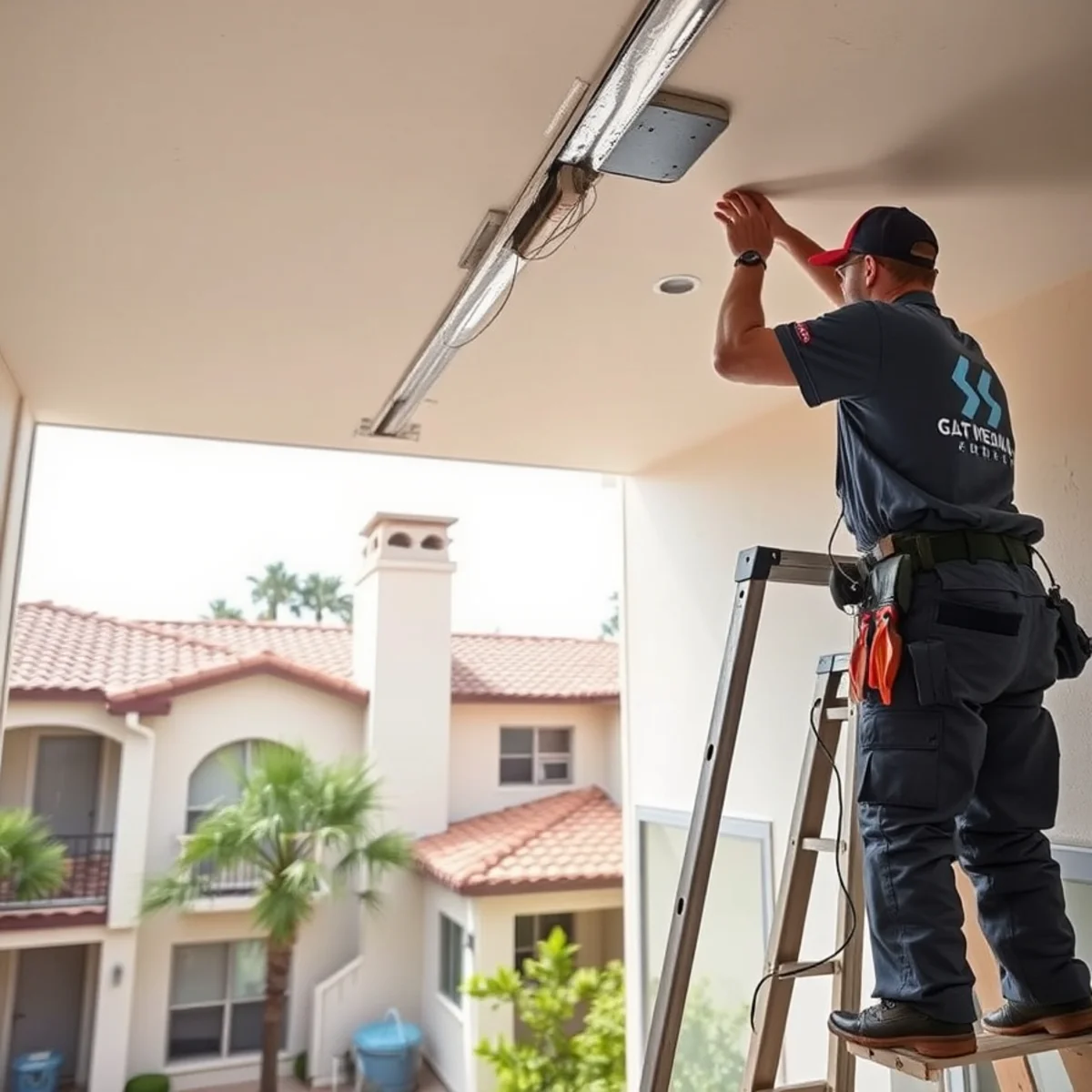
Water comes through your condo ceiling from the unit above, or a pipe in a shared wall lets go and soaks two units at once. Your first question, right after where is the shut-off, is who is responsible for this: you, your neighbor, or the HOA? In a California condo, the answer lives in your governing documents, and it is not always where owners expect.
The wrong assumption costs money and time. Owners who understand the difference between their unit and the common area, before a leak happens, get repairs started faster and avoid fights over the bill.
First, stop the water and document it
Responsibility is a paperwork question. Water is an emergency. Shut off the water to your unit if the leak is inside it, or notify the HOA immediately if it is coming from a common-area line, then get the water extracted and the structure drying. Mold can begin within 24 to 48 hours in our humidity, so the clock starts the moment materials get wet. Our emergency water removal service runs around the clock, and our residential water damage restoration team handles the drying and repairs owners are responsible for inside the unit.
Three buckets: separate interest, common area, and exclusive-use
California condos are governed by the Davis-Stirling Act and by your association's CC&Rs, and both divide the property into categories that decide who maintains what.
- Separate interest: your unit, typically the interior airspace and the finishes, often defined as the paint inward or the studs inward depending on the documents.
- Common area: everything shared, such as the roof, exterior walls, and the main plumbing lines that serve multiple units.
- Exclusive-use common area: shared but assigned to you, like a balcony, a patio, or sometimes a specific run of pipe, which the CC&Rs may make either the owner or the association responsible for maintaining.
Who typically pays for the repair
As a general pattern, and only a pattern, since your CC&Rs control:
- A leak from a common-area pipe or the roof is usually the association's responsibility to repair at the source.
- Damage inside your unit, to your drywall, flooring, and cabinets, is often the owner's responsibility to restore, even when the source was common-area.
- A leak that starts in your unit and damages a neighbor's can put you on the hook, especially if negligence is involved.
- Who repairs the source and who repairs the resulting damage are frequently two different parties.
The master policy versus your HO-6
Insurance mirrors that split, and this is where owners get surprised.
- The HOA's master policy generally covers the building structure and common areas, sometimes to the original finishes and sometimes only to the bare studs, depending on the policy.
- Your individual HO-6 condo policy covers your personal property and often your interior improvements and betterments, the gap the master policy does not.
- Loss assessment coverage on your HO-6 can help with your share of a deductible or damage the association assesses to owners.
- The association's master-policy deductible can be large, and the CC&Rs may pass part of it to the owner whose unit was involved.
Read your CC&Rs before you need them
- Find your CC&Rs and the association's maintenance matrix, if it has one, which lists who maintains each component.
- Identify where your separate interest ends and the common area begins, in writing.
- Confirm what the master policy covers and what its deductible is.
- Check that your HO-6 includes enough coverage for your improvements and a loss-assessment provision.
- Keep the property manager's and association's emergency contacts with your shut-off information.
Check your governing documents
Responsibility in a California condo varies by association and is controlled by your CC&Rs and the Davis-Stirling Act, not by a single general rule. Use this as a map, but read your own documents and confirm specifics with your HOA, your insurer, or a qualified attorney before assuming who pays.
When a leak crosses units
Stacked and shared-wall construction means one leak rarely stays in one unit. In condo and townhome communities on the Mesa and down in West Beach, we regularly dry two or three units from a single failed line, coordinating with owners and the association at once. If mold has set in behind a shared wall, our mold remediation service contains and treats it and documents the work for every party's records.
When several owners and the association are all involved, documentation decides how smoothly it resolves. Photograph the source and every affected unit, keep the moisture readings and drying logs, and note the date and time the leak was discovered and reported. If one owner's negligence caused the loss, insurers may pursue reimbursement between policies, and a clear record is what keeps that process from turning into a neighbor dispute.
In a condo, knowing your CC&Rs is half the battle and stopping the water fast is the other half. Get the water out and the structure drying first, then sort responsibility with your documents and your insurer. Restore Santa Barbara is locally owned, IICRC-certified, and answers the phone at any hour. Call (201) 277-9344, and a crew can reach most communities within about 30 minutes to extract the water and start drying.
Frequently Asked Questions
Who is responsible for water damage in a California condo, the owner or the HOA?
What is the difference between the HOA master policy and my condo insurance?
Does the HOA pay to repair the inside of my unit after a common-area leak?
Services in this article
Areas we serve
Keep reading
 For Businesses
Property Manager's Guide to Tenant Water Damage in California
The 2 a.m. call about a flooding unit raises two separate questions: stop the damage now, and sort out who pays later. Here is how California law generally splits the responsibility.
 For Businesses
Water Damage in a Hotel or Restaurant: A Plan for State Street Businesses
For a downtown hotel or restaurant, water damage means lost revenue for every hour you stay closed. A written response plan is what gets the doors back open fast.