
Why Your Historic SB Home's Clay Sewer Line Is a Ticking Time Bomb
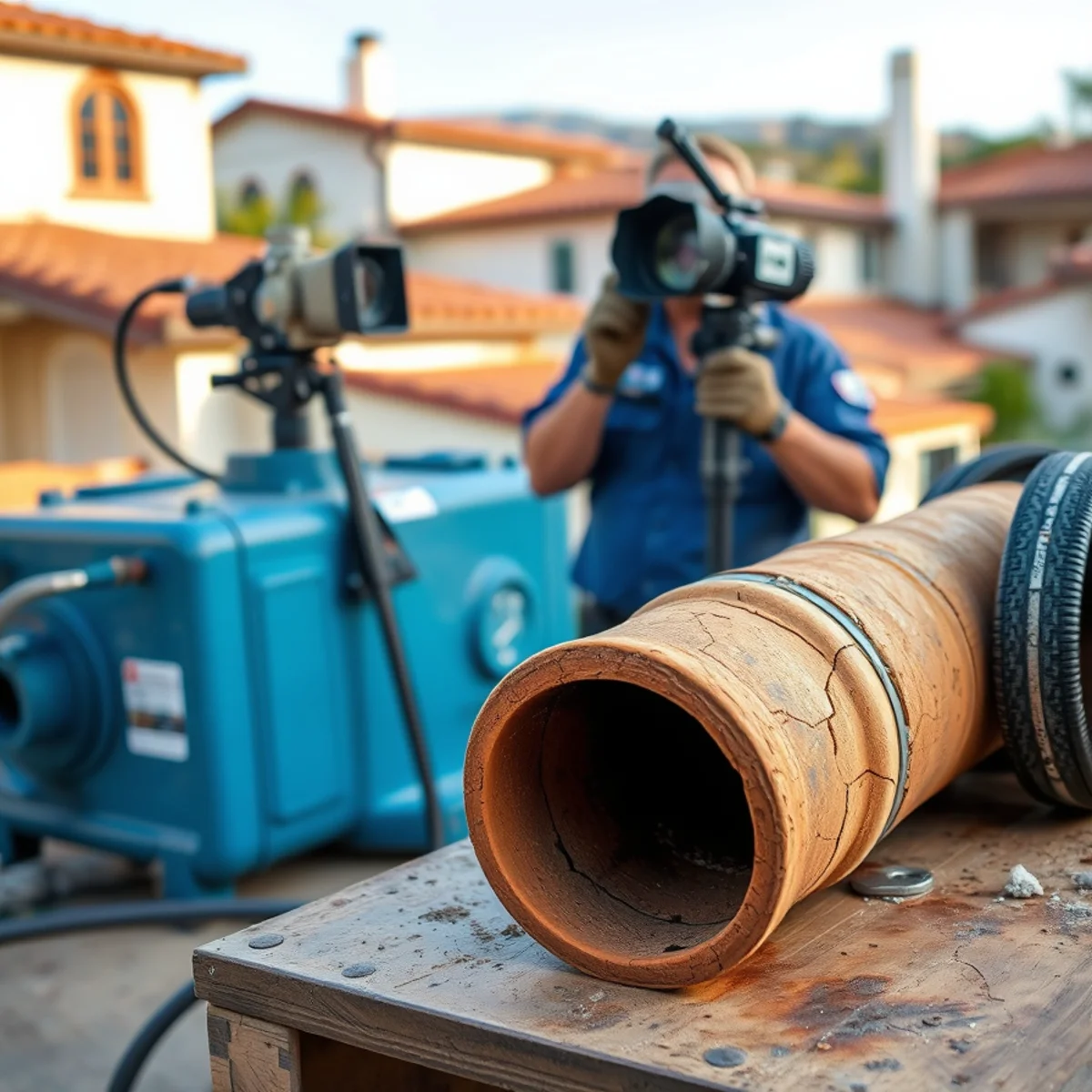
There is one pipe in your home you almost certainly never think about. It runs underground, from the house out to the city main, and it carries away everything that goes down every drain. In a historic Santa Barbara home it is very likely made of clay, it is probably eighty or more years old, and it will get exactly zero of your attention until the day it backs sewage up into the lowest drain in the house.
When that day comes, it is not a plumbing inconvenience. It is a Category 3 black-water event, the most hazardous kind of water damage, and it does not wait for a convenient time to happen.
What a clay sewer lateral is, and why Santa Barbara has so many
For decades, the standard material for a home's sewer lateral was vitrified clay, essentially a fired ceramic pipe. It was cheap, widely available, and resisted the corrosion that eats metal. Most homes built here in the 1920s through the 1940s were connected to the city with it, and a great many of those laterals are still in the ground today, doing a job they were never expected to do for a full century.
Clay's weakness is not the pipe itself, it is the joints. Clay comes in short sections with a joint every few feet, and every joint is a seam that can shift, gap, or invite trouble in from outside.
How clay sewer lines fail
- Root intrusion: tree and shrub roots sense moisture at the joints, work their way in, and grow into a dense mat that snags waste and blocks flow
- Offset joints: decades of ground movement and settling pull joints out of alignment, so solids catch on the lip instead of flowing past
- Cracking and collapse: clay is brittle; roots, shifting soil, and age crack sections, and a badly cracked pipe can eventually collapse
- Bellies: a section that has sagged into a low spot holds water and waste instead of draining, which becomes a chronic clog point
None of these happen overnight. A clay lateral usually gives you warning signs for months or years before the full backup, if you know what to listen and look for.
The warning signs to catch early
Pay attention when more than one drain acts up at once, because that points past a single fixture to the shared line underneath. Watch for slow drains throughout the house, gurgling from toilets or floor drains when you run water elsewhere, sewage odors indoors or in the yard, or a patch of lawn that is oddly soggy or unusually green over the path of the line. Backups that appear first in the lowest fixtures, a downstairs toilet or a floor drain, are a classic signal that the main lateral, not a branch, is the problem.
Why a backup is a health hazard, not just a mess
Sewage is Category 3 water. It carries bacteria and pathogens, and anything porous it touches, carpet, drywall, cabinetry, is generally not salvageable and has to be removed. This is not a job for a mop and household cleaner. Proper sewage cleanup means containment, extraction, removal of contaminated materials, disinfection, and drying, all handled with the right protective equipment.
Then there is what comes after. Once organic material and moisture are in the structure, mold can begin to grow in 24 to 48 hours, and our marine layer only speeds that along. If a backup soaked wall cavities or subfloor, professional mold remediation with containment and HEPA filtration keeps a contamination problem from becoming an air-quality problem throughout the house.
What to do about an aging clay lateral
The smartest move is to find out the condition of your line before it fails. A camera inspection sends a scope down the lateral to reveal roots, cracks, offsets, and bellies, and pairs naturally with professional leak detection to locate a problem section precisely instead of digging blind. Knowing what is down there lets you plan a repair on your schedule rather than react to an emergency on the pipe's schedule.
This is a neighborhood-wide reality in the older parts of town. Homes up in Eucalyptus Hill and throughout the Lower East tend to share the same generation of clay laterals, so if your house is from that era, assume the line is old until a camera proves otherwise.
Expert tip
If you have to snake the same drain more than once a year, do not just keep clearing it. Repeat clogs in a historic home usually mean roots or an offset joint in the clay lateral, and a camera inspection will tell you which, before the next clog becomes a backup.
The bottom line
A century-old clay sewer line is not a matter of if but when, and the homeowners who come out ahead are the ones who look before it fails. Learn the warning signs, get the line scoped, and never treat a sewage backup as an ordinary spill. If you are dealing with one now, call Restore Santa Barbara at (201) 277-9344. A live person answers around the clock, and our IICRC-certified crew handles the cleanup, disinfection, and drying the right way.
Frequently Asked Questions
How long do clay sewer lines last?
Is a sewage backup dangerous to clean up myself?
How can I tell if my sewer lateral is failing before it backs up?
Services in this article
Areas we serve
Keep reading
 Local Santa Barbara
Spike in Your SB City Water Bill? You Might Have a Hidden Leak
An unexplained jump in your city water bill is one of the clearest signs of a hidden leak. Here is the 20-minute meter test to confirm it, and where leaks like to hide in older Santa Barbara homes.
 Local Santa Barbara
Tile Roofs and Water Damage: Why SB's Spanish Red Tile Isn't Always Waterproof
That classic Santa Barbara red-tile roof looks like it could last forever, and the tile nearly can. The waterproofing hidden underneath it cannot. Here is why Spanish tile roofs leak, and where to look before your ceiling does the telling.
 Local Santa Barbara
Santa Ana Wind Damage: How Winter Gusts Turn Into Roof Leaks
Santa Ana winds blow through dry and rainless, and your roof looks fine afterward. Then the next storm arrives and the ceiling starts dripping. Here is how winter wind events quietly set up roof leaks in Santa Barbara.