
Ceiling Leaking During a Storm? What to Do in the Next 30 Minutes
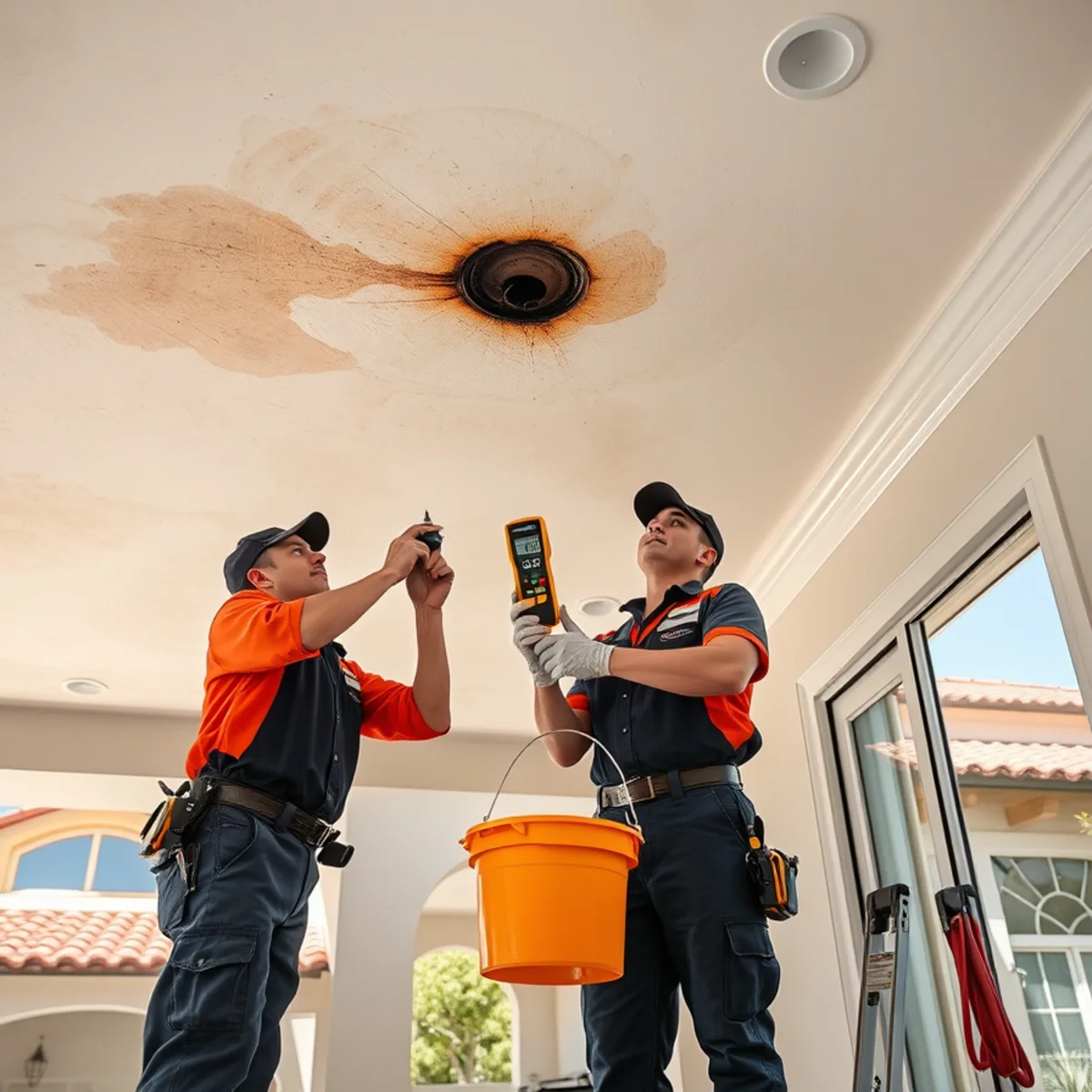
The rain is coming down hard, and a dark ring has appeared on the ceiling. It is growing. A drip starts, then a steady trickle, and the drywall overhead is beginning to sag. During one of Santa Barbara's winter storms, a roof leak can go from a spot to a downpour inside the house in minutes.
A bulging, water-filled ceiling is not just a stain problem. Saturated drywall gets heavy fast, and a sagging section can let go all at once, bringing down plaster, insulation, and gallons of water onto the floor below. On the hillside streets of the Riviera, where steep drainage sends runoff straight at homes and older tile roofs take a beating, a storm-season ceiling leak needs a fast, calm response.
You have about 30 minutes to get ahead of this. Here is the order.
Minutes 1 to 5: Protect the Space Below
Move furniture, rugs, and electronics out from under the leak. Anything you cannot move, cover with plastic sheeting or a tarp. Put down a bucket or a plastic bin to catch the water, and lay towels around it to control the splash. If water is anywhere near a ceiling light or fixture, treat the whole area as electrified.
Minutes 5 to 10: Cut the Power to That Area
Water tracks along framing and pools on top of light fixtures and electrical boxes. If the leak is near any fixture, switch off the affected circuits at the breaker before you do anything else under that ceiling. Do not flip the light on to get a better look; that is exactly the circuit you want dead.
Expert tip
A ceiling light fixture filling with water is a serious shock and fire risk. If you see water dripping from a light or a bulging fixture, keep everyone out of the room and cut the power at the panel. Do not touch the fixture until the circuit is off and the area is dry.
Minutes 10 to 15: Relieve the Bulge
This step feels wrong, but it prevents a bigger collapse. If part of the ceiling is sagging and holding water, you want to drain it in a controlled way rather than let the whole section fail. Put a bucket underneath, then use a screwdriver to poke a small hole at the lowest point of the bulge. The trapped water drains through that one spot instead of bringing the ceiling down across the room.
Minutes 15 to 25: Find and Slow the Source
If you can safely reach the attic with a flashlight, look for where the water is entering and trace where it runs. Placing a bucket up there, closer to the source, can catch water before it reaches the drywall. From the outside, only if it is safe and you are not climbing onto a wet roof in a storm, a tarp over the affected roof section can slow the intrusion. Never get on a roof during a storm; leave that for after the weather passes or for a professional.
Minutes 25 to 30: Document Everything and Call for Help
Photograph and film the stain, the drips, the sagging, and any damaged belongings before cleanup. Document everything for your claim. Then get the right crew moving. A storm-driven ceiling leak usually needs three things addressed together: the roof intrusion, the water damage, and the drying. Our roof leak water damage service traces and stops the intrusion, ceiling water damage repair handles the saturated drywall and the drying, and full storm damage cleanup covers everything the weather brought in at once.
Why Storm Leaks Hit Santa Barbara Homes Hard
Santa Barbara gets most of its 18 inches of annual rain in a few concentrated winter months, often in intense atmospheric-river storms. Roofs that stay dry most of the year face their whole yearly load in a handful of days. Older clay-tile and built-up roofs on 1920s to 1940s homes develop cracked tiles, failed flashing, and worn underlayment. When the big storms arrive, those weak points leak.
- Cracked or slipped roof tiles that expose the underlayment
- Failed flashing around chimneys, skylights, and vents
- Clogged gutters and valleys that let water pool and back up under the roofing
- Worn underlayment on roofs that have not been updated in decades
- Debris and runoff from hillsides overwhelming drainage
In Montecito, storm risk carries added weight. After the Thomas Fire in 2017, the January 2018 debris flows showed how quickly rain on a burn scar can turn dangerous across the area. We serve homeowners throughout Montecito and the surrounding foothills with careful, respectful, thorough storm response.
Do Not Wait for the Ceiling to Dry on Its Own
A ceiling stain that dries and fades is not proof the problem is gone. Water has already soaked the drywall, the insulation above it, and the framing, and in our coastal humidity mold can take hold within 24 to 48 hours. IICRC-certified technicians use moisture meters and thermal imaging to find the full reach of the water, dry the cavity, and confirm it is dry before any repair or repaint. Paint over damp drywall and the stain, along with the mold, will come back.
A leaking ceiling during a storm rewards a calm, quick response. Clear the space, cut the power near fixtures, relieve the bulge so the ceiling does not collapse, and document everything before you call. Restore Santa Barbara is IICRC-certified, licensed, bonded, and insured, and we work directly with your adjuster from the first photo forward. If your ceiling is leaking right now, call (201) 277-9344. A live person answers in the middle of the storm, and a local crew will be on the way within 30 minutes.
Frequently Asked Questions
Should I poke a hole in a bulging ceiling?
Is a leaking ceiling dangerous?
What causes ceiling leaks during storms in Santa Barbara?
Will the ceiling stain go away after it dries?
Services in this article
Keep reading
 Emergency Guide
What to Do in the First 24 Hours After Water Damage
The first day after water damage decides how bad it gets. Mold can start within 24 to 48 hours, and insurers expect fast action. Here is exactly what to do — and what not to do — in the first 24 hours.
 Emergency Guide
Dishwasher Leaked Overnight and Flooded the Kitchen — Now What?
You wake to water across the kitchen floor and a dishwasher to blame. Here is how to stop the source, get the water out from under the cabinets, and dry it before mold sets in.
 Emergency Guide
Standing Water in the House: Is It Safe to Stay, and Who to Call First?
Standing water in your home raises an urgent question before cleanup even begins: is it safe to stay? The answer depends on the electricity, the contamination, and the structure.