
Burst Pipe? Your First-Hour Action Plan to Stop the Damage
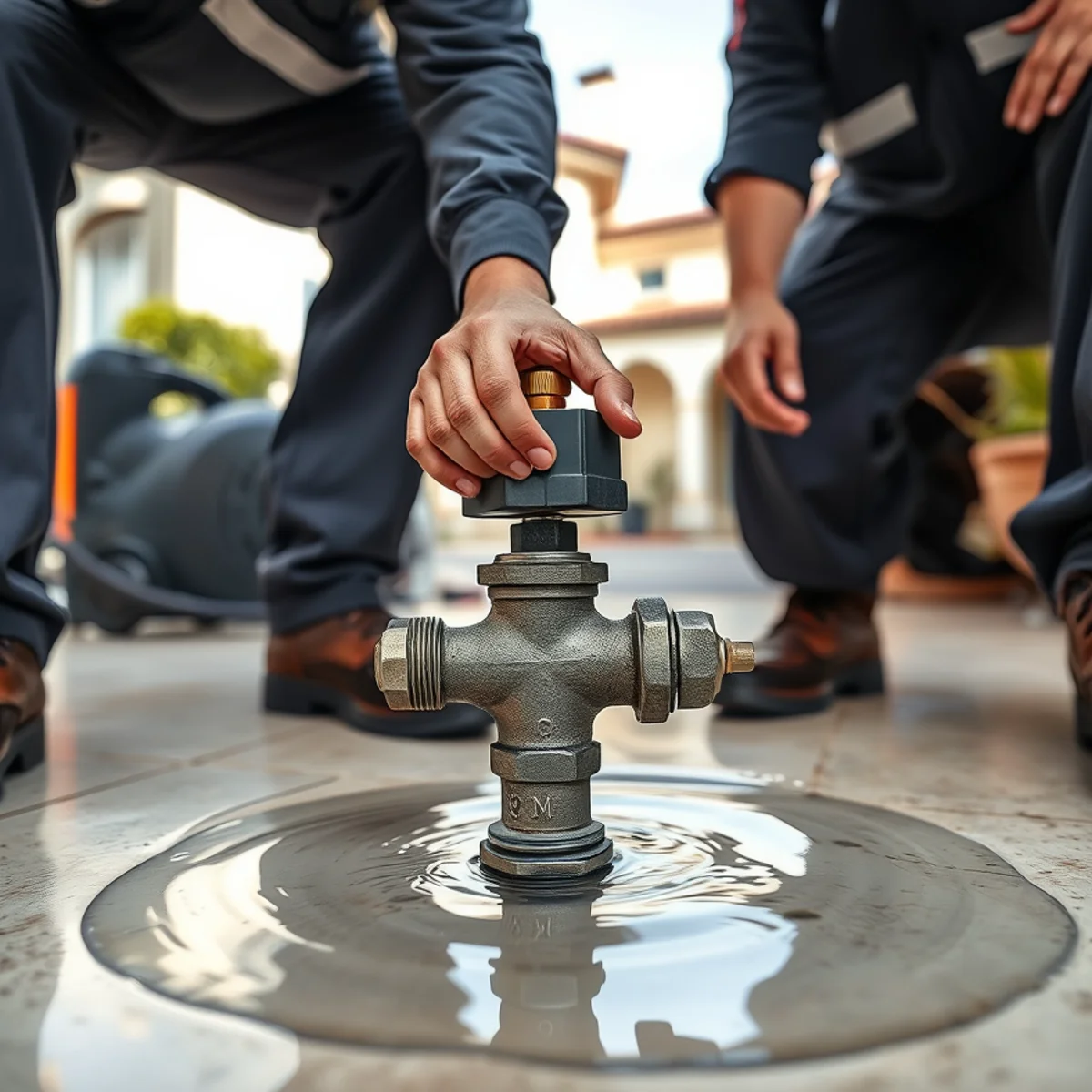
A pipe never fails at a convenient hour. It lets go at 2 a.m., behind a wall, while you sleep or while the house sits empty for the weekend. Under normal household pressure, a half-inch supply line can push several gallons of water into your home every minute. Within an hour, that is enough to soak drywall, saturate the subfloor, and run down into the rooms below.
In an older cottage among the family streets of San Roque or a 1920s building along the State Street corridor, water rarely stays on the surface. It wicks into plaster and lath, slides under baseboards, and vanishes into wall cavities you cannot see. What you do in the first sixty minutes decides whether this is a fast dry-out or a month of repairs.
Work the steps below in order. Stop the water first, stay safe around electricity, then limit the spread.
Step 1: Shut Off the Main Water Valve
Everything starts here. Find and shut off the main valve, and the flooding stops at the source. Turn the valve clockwise until it will not turn any further. In most Santa Barbara homes the shutoff sits in one of three places: near the water heater or inside the garage, along an exterior wall on the street-facing side of the house, or in a buried box near the curb where your meter lives. A round wheel-style valve may need several full turns.
Expert tip
Find your main valve today, before an emergency. Walk out to the meter box, open the lid, and locate the shutoff. Keep a meter key or pliers nearby. At 2 a.m. in the dark, you do not want to be learning where it is for the first time.
Step 2: Cut the Power if Water Is Near Outlets or Fixtures
Water and electricity are a dangerous mix. If water has reached wall outlets, recessed lights, or the electrical panel, switch off the affected circuits at the breaker. One rule holds absolutely: never step into standing water to reach the panel. If the only path runs through the water, stay clear and call your utility or a licensed electrician. Your safety outranks any belonging.
Step 3: Open Faucets and Drain the Lines
Even after the main is closed, the pipes still hold pressurized water. Open the faucets at the lowest point in the house, then a few upstairs, and flush the toilets. This drains the remaining water into the fixtures instead of the break, and it relieves pressure so a second joint does not give way while you work.
Step 4: Move Belongings and Document Everything
Now protect what you can. Lift furniture legs onto foil or wood blocks, carry electronics and irreplaceable items to a dry room, and pull up area rugs before the dye bleeds into the floor. Before you mop a single drop, photograph and film the damage from every angle. Document everything. Those images are the backbone of your insurance claim, and a good restoration crew will document their own work to match.
Step 5: Remove the Water, Then Call for Help
For a thin layer, towels, a mop, and a wet/dry vacuum will get you started. Standing water is a different problem. It hides under flooring and inside walls, and a household vacuum cannot pull it back out. That is the point to bring in professional water extraction with truck-mounted equipment. Our emergency water removal crews answer the phone at 2 a.m. and roll within 30 minutes, and our full burst pipe cleanup service handles the job from extraction through structural drying and repair.
Why Pipes Burst in Santa Barbara Homes
Santa Barbara's housing stock skews old. Many homes in San Roque and the downtown State Street corridor still run on original galvanized steel supply lines from the 1920s through the 1940s. Galvanized pipe corrodes from the inside out, narrowing and weakening until a joint or a thin section finally splits. Add the pressure swings of a hillside water system and an occasional foothill cold snap, and older lines reach a breaking point.
- Corroded galvanized supply lines that have thinned from decades of use
- Worn washing machine and dishwasher hoses that fail under constant pressure
- Loose or aging compression fittings under sinks and behind toilets
- Water hammer, the banging you hear when a valve shuts, stressing joints over time
- Rare foothill freezes that leave pipes in crawl spaces and exterior walls vulnerable
Three Mistakes That Make It Worse
- Waiting to see if it stops on its own. It will not, and every minute adds gallons.
- Running box fans and hoping the walls dry. Surface air does not reach moisture trapped inside plaster and framing.
- Throwing away wet materials before documenting them. Your adjuster needs to see what was damaged.
Why the First Hour Decides Everything
Mold can begin to grow in 24 to 48 hours, and Santa Barbara's marine layer speeds it along by keeping indoor humidity high. Coastal moisture means a wall that feels dry to the touch can still be wet inside. IICRC-certified technicians use moisture meters and thermal imaging to map that hidden moisture, then dry the structure completely before it becomes a mold problem. Skip that step and a modest dry-out can turn into a far larger remediation bill.
A burst pipe is a race against the water, and the first hour is where you win or lose it. Shut off the main, stay clear of energized water, document the scene, and get extraction moving fast. Restore Santa Barbara is locally owned, licensed, bonded, and insured, and we work directly with your adjuster from the first photo to the final moisture reading. If a pipe has let go in your home, call us now at (201) 277-9344. A live person answers, day or night, and a local crew is on the way within 30 minutes.
Frequently Asked Questions
How much water does a burst pipe release?
Should I turn off the electricity when a pipe bursts?
How fast can mold grow after a pipe bursts?
Do I still need a professional if I already mopped up the water?
Services in this article
Areas we serve
Keep reading
 Emergency Guide
What to Do in the First 24 Hours After Water Damage
The first day after water damage decides how bad it gets. Mold can start within 24 to 48 hours, and insurers expect fast action. Here is exactly what to do — and what not to do — in the first 24 hours.
 Emergency Guide
Dishwasher Leaked Overnight and Flooded the Kitchen — Now What?
You wake to water across the kitchen floor and a dishwasher to blame. Here is how to stop the source, get the water out from under the cabinets, and dry it before mold sets in.
 Emergency Guide
Standing Water in the House: Is It Safe to Stay, and Who to Call First?
Standing water in your home raises an urgent question before cleanup even begins: is it safe to stay? The answer depends on the electricity, the contamination, and the structure.