
How Much Does Water Damage Restoration Cost in Santa Barbara? (2026 Guide)
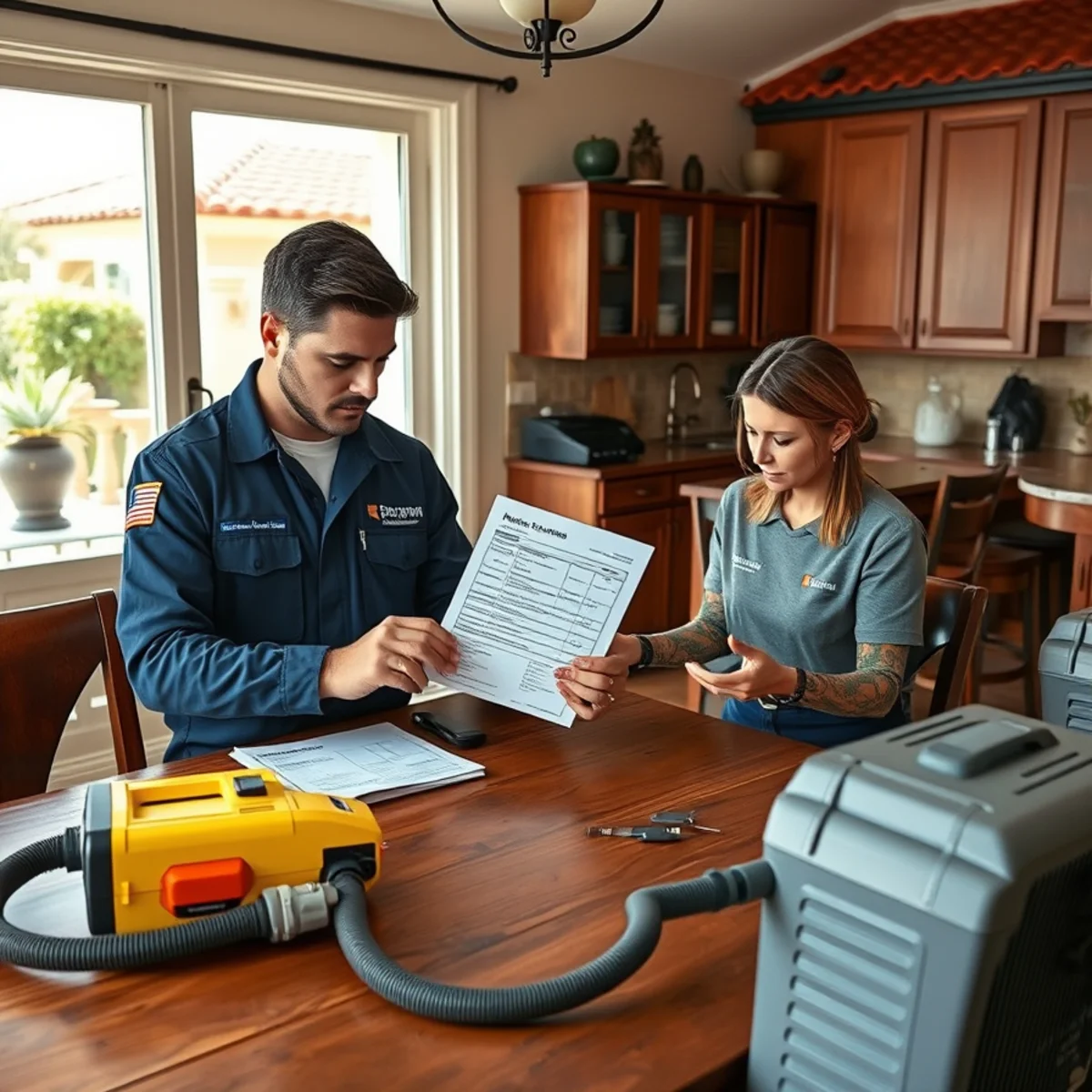
After the water is out, the next question hits: what is this going to cost? It is a fair thing to want a straight answer, and most guides give you a national average that means little for a specific home in Santa Barbara.
The honest answer is that water damage restoration is not one price, it is a range that depends on how much water, what kind of water, how far it spread, and how fast the drying started. Wait a day and a small job can double, as materials that could have been dried have to be removed and replaced instead. This guide breaks down the real numbers for 2026 so you can budget with clear eyes.
Here is what restoration actually costs, and what moves the number up or down.
Typical Water Damage Restoration Costs in 2026
For homes in California, water damage restoration typically runs between $1,600 and $9,700. Most homeowners land in the $1,384 to $6,384 range for a common loss, such as a burst supply line or an appliance leak caught reasonably early. Larger or contaminated losses climb from there. When insurance is involved, the average water-damage claim runs close to $13,954, which reflects the bigger, more complex jobs.
Expert tip
The single biggest cost lever is time. Mold can begin within 24 to 48 hours in our coastal humidity, and once it does, a straightforward dry-out becomes a remediation project. Calling for extraction the same day is the cheapest decision you can make.
The Water Category Changes Everything
The type of water is the first thing that sets the price, because it dictates how much can be saved and how much protective work is required. Restoration is often priced by the square foot, and the category drives that rate:
- Category 1, clean water from a supply line, typically runs about $3 to $4 per square foot
- Category 2, grey water from appliances or overflow, runs about $4 to $6.50 per square foot
- Category 3, black water from sewage or outside flooding, runs about $7 to $7.50 per square foot
Black water costs more because it is a biohazard. The porous materials it touched, carpet, pad, drywall, cannot be saved and must be removed and replaced, and the area has to be disinfected. A clean-water leak of the same size is far cheaper simply because more of the structure can be dried and kept.
What Else Drives the Price
Beyond the water category, several factors move the final number:
- The size of the affected area, since more square footage means more extraction, drying, and equipment
- How far the water traveled, as water that reached multiple rooms or a lower floor costs more
- The materials involved, since hardwood, plaster and lath, and cabinetry cost more to dry or replace than tile
- How long the water sat before drying began, which decides how much can be saved
- Whether mold has already started, which adds remediation to the scope
- Structural repairs after drying, from drywall and paint to flooring and trim
Santa Barbara's housing adds its own wrinkle. Many homes here are 1920s to 1940s Spanish Colonial and Mediterranean houses with plaster and lath walls, wood framing, and raised foundations over crawl spaces. Plaster holds water differently than modern drywall and often takes longer to dry, and crawl spaces under these homes can hide moisture that extends the job. That local reality is part of why a knowledgeable, IICRC-certified residential restoration crew matters for an accurate estimate.
How the Restoration Process Maps to Cost
It helps to see where the money goes. A typical restoration moves through a few stages, each with its own equipment and labor:
- Inspection and moisture mapping with meters and thermal imaging to find the full reach of the water
- Water extraction, removing standing water with truck-mounted and portable extractors
- Structural drying, running air movers and LGR dehumidifiers for several days to dry the framing and materials
- Cleaning and disinfecting, including antimicrobial treatment where the water was contaminated
- Repairs and reconstruction, restoring drywall, flooring, and finishes to their prior condition
The water extraction stage handles the standing water, and the structural drying and dehumidification stage is where much of the multi-day equipment cost lives. Cutting the drying short to save money is exactly how hidden moisture and mold turn into a second, larger bill.
How Insurance Fits In
Most homeowners policies cover sudden and accidental water damage: a burst pipe, a failed water heater, an overflowing appliance. Gradual leaks that were neglected are typically treated differently, and outside surface flooding often requires separate flood coverage. Because the average claim runs near $13,954, a covered loss usually far exceeds a typical deductible, which is why documenting the damage thoroughly matters. Photograph everything before cleanup, keep failed parts, and work with a restoration company that documents its own work and coordinates directly with your adjuster.
We serve homeowners throughout Santa Barbara County, from the coast to the foothills, and our crews are based in Downtown Santa Barbara on State Street, which keeps response times short across the city.
Why the Cheapest Bid Is Not Always the Cheapest Job
A low estimate that skips proper moisture mapping or cuts the drying short can leave water behind in walls and subfloor. That water does not disappear, it feeds mold and warps materials, and the repair bill lands weeks later. IICRC-certified technicians dry the structure to a verified moisture level and prove it with a meter, which is what actually protects your home and your budget. The goal is to do it once, correctly.
Water damage restoration in Santa Barbara is a range, not a fixed price, and the number you land on depends most on the water category, the area affected, and how fast the drying started. Act the same day and you keep the job on the smaller end of that range. Restore Santa Barbara is IICRC-certified, licensed, bonded, and insured, we give clear estimates, and we work directly with your adjuster from the first inspection to the final moisture reading. For a straight answer about your situation, call (201) 277-9344. A live person answers any hour, and a local crew will be on the way within 30 minutes.
Frequently Asked Questions
How much does water damage restoration cost in Santa Barbara?
Why does sewage or black water cost more to clean up?
Does homeowners insurance cover water damage?
How can I keep water damage restoration costs down?
Services in this article
Areas we serve
Keep reading
 Cost & Insurance
Sewage Backup Cleanup Costs — and Whether Insurance Will Pay
Sewage backups are the costliest water losses to clean up, and insurance usually pays only with a backup endorsement most homeowners forget to buy.
 Cost & Insurance
Flood Insurance vs. Homeowners Insurance: Why Storm Flooding Isn't Covered
Storm flooding is excluded from every standard homeowners policy. Here is why, how flood insurance differs, and who on the South Coast should carry it.
 Cost & Insurance
What Drives Mold Remediation Costs Up (or Down) on the Central Coast
Mold remediation costs swing widely on the Central Coast. Learn what pushes the price up, what keeps it down, and why the marine layer makes speed everything.